‘Currently there is no illegal slaughter’
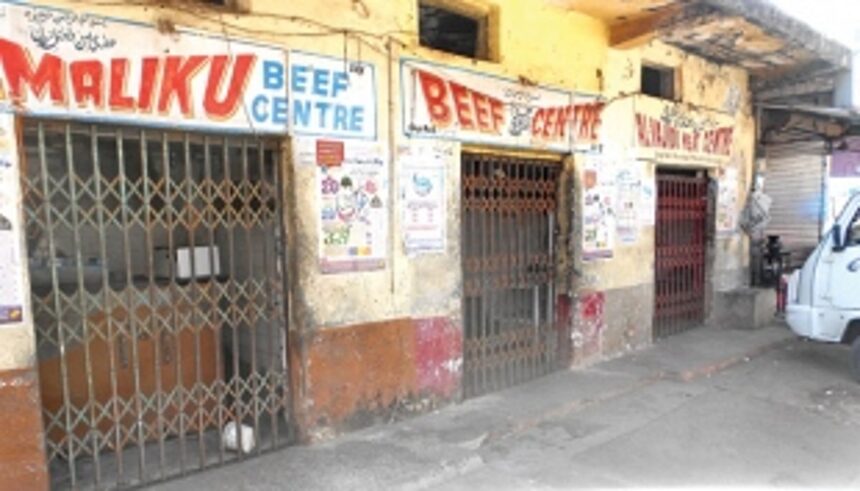
Local traders involved in beef sale are currently jobless, but the President of the All Goa Quraishi Beef Traders, Jafar Bepari, says plans are underway to restart sales adding that security is the biggest
of their worries
Herald: Is the GMCL bringing beef to the State affecting the local traders in any way?
Jafar Bepari: More than us being affected, it is the consumer that is complaining that the meat is not fresh but is frozen. Some have been found to be frozen for over six months. We’ve always had the support of the meat complex and we have our animals in Belgaum that are waiting to be slaughtered. The only thing remaining is the permit for the vehicles. We do not want to take any chance when bringing the animals to Goa.
Herald: Do you and other traders plan on re-starting sale of beef anytime soon?
Bepari: Of course, we want to start our businesses again. On Monday we will be meeting with the chairman of the meat complex to discuss details about us resuming our business. We have asked the police in places like Valpoi for security.
Herald: Before this issue began, how would the traders work?
Bepari:We were working very well. We would take our animals to the complex to be slaughtered and then sell the meat at our stores. What happens with us is that if we bring the meat from Karnataka, we suffer losses. When we bring the entire animal, we save with the fat and other parts.
Bringing beef causes us losses, but when we bring animals, there is some saving.
Herald: What do you have to say about the NGO interference when procuring the animals?
Bepari: We don’t know why the NGOs behave the way they do. All over India, there is sale of beef without the interference of any animal activists.
Why is it that only here they have a problem? We understand that the presence of a qualified doctor is necessary, but why does the NGO representative have to be present.
We have therefore taken this clause to the court asking them to remove this NGO representative.
Herald: What do you have to say about illegal slaughter in the state?
Bepari: Currently there is no illegal slaughter. Those that were involved in the past have stopped now because it is extremely risky and no one wants to take that big a risk. There is no profit.
Sometimes what happens is if we have extra meat, we tend to keep it in storage. What has happened in the past is that people have called this meat as illegal slaughtered meat when it really isn’t.
Our demand now is to stop slaughter altogether: Parab
The Govansh Raksha Abhiyan was at the forefront in getting a law passed allowing only cattle above the age of 12 years to be slaughtered, that too in the presence of a doctor and NGO representative. Hanuman Parab who has in the past had to face death threats talks of this decision
Herald: Tell us about your movement and your work against cow slaughter.
Hanuman Parab: Our movement is for the cow and its progeny. We started Govansh Raksha Abhiyan in 2012 with the aim of creating awareness against the illegal slaughter in Valpoi.
Our first raid was in Mardol where we found 18 calves that were about to be slaughtered. It was because of this that we decided to pursue it seriously. After our first raid, we went to the High Court and they allowed us to take custody of these animals. So we rescue these animals as well as cattle hurt in accidents and stray cattle. Today we have over 250 animals.
Herald: What was the situation when you first began?
Parab: Our first petition was for the government to control the amount of illegal slaughter that was going on. Despite the norms laid down, authorities were hand-in-glove with the law breakers. What they were doing was turning their selling point into a killing point. This was not allowed. They were only allowed to slaughter the animal at GMCL and sell the meat at the shop. It wasn’t happening then, and it is still not happening. What they were doing is that on certificates they call it buffalo meat, but they would instead sell cow meat. They were also slaughtering cattle less than a year old.
Herald: Locals traders have complained that NGO’s like yours are involved in stopping the entry of animals and meat into the state.
Parab: In Goa, the Food and Drugs Administration (FDA) sent me a letter that saying that only two vehicles have approvals for import.
The FDA has not given any other permission to bring the meat. Vehicles also need to have RTO permissions.
Only then can you say that the meat is hygienic. The State revenue is going into a loss. If you see any consumable brought into the State, may it be eggs or vegetables, everyone has to pay a tax.
They should charge the same for beef also. Even Rs 1 or 2 per kg will prove to be beneficial. They don’t have permissions; if they did we would not get involved. Our demand now is to stop slaughter altogether and will join any political party that is with us in this idea of ours.
The cow is the mother of our land and it should be protected.
‘Illegal slaughter should be stopped’
The Goa Meat Complex Limited stepped in to deal with the shortage of beef in the State a couple of weeks ago. Lyndon Monteiro, the chairman of the corporation says that an improvement from ‘no beef to some beef’ was necessary but personally believes that beef should be easily available without any shortages
Herald: What is the current situation of beef supply in the State? Are you satisfied with it?
Lyndon Monteiro: I would like to clarify that the Goa Meat Complex Limited (GMCL) is not in the business of beef trading. We own a service abattoir and our job is to slaughter an animal brought to the slaughter house by complying with the provisions of the Animal Preservation Act, 1995, Ban on Cow Slaughter Act and other acts, rules and court orders in force.
I would say that the supply of beef in Goa at the moment is inadequate. But it has improved from a situation of ‘no beef to some beef’. Personally I am not fully satisfied with this situation as I would want beef to be easily available without any shortage. And ever since the GMCL has stepped in to facilitate the import of beef, the situation is improving slowly and I will ensure that by Easter there is enough and more fresh, hygienic and certified beef available in Goa.
Herald: How long do you expect this situation to continue?
Monteiro: GMCL will facilitate and ensure that by Easter the shortage of beef is going to be a thing of the past. We are not just going to facilitate import of any beef from any unknown source. It took GMCL a little while as identifying a proper source having all proper facilities and Food Safety Standards Authority of India Registration was not easy. Now that the source has been identified and the required logistics for transportation as per food safety norms are in place, the situation will improve very fast.
Herald: How often is the GMC getting consignments to the State? And as local traders complain, does the complex face any NGO interference near the border?
Monteiro: GMCL is only facilitating the import of beef in a proper and legal manner. The beef comes in the state depending on the requirement. Currently the requirements are low on account of the Lenten Season. But come Easter the demand will go up. Till now we have not encountered any problem from any quarters as the consignments are fully legal. Should we face any problem, the help of the right agencies would be taken.
Herald:: Earlier, the Complex had promised to provide fresh meat but is currently supplying frozen meat. Many from the beef eating community seem discouraged. What do you have to say about it?
Monteiro: When GMCL decided to step in to end the shortage of beef in Goa, we definitely spoke of fresh beef only. But we were forced to get one consignment of frozen meat for, as mentioned, it was not easy to identify a proper source in such a short time, after the sources closer to Goa refused to supply beef citing some illogical reasons. Presently the GMCL facilitates import of fresh beef only.
Herald: Your thoughts on illegal slaughter. Was it and is it still rampant?
Monteiro: Illegal slaughter should be completely stopped. Certain unscrupulous people might still be doing it here and there. I have already requested the competent authority of the government to come down heavily on such people and not to leave any room for such people to risk the lives of unsuspecting beef consumers. When an animal is slaughtered legally at an authorized slaughter house, the animal is subjected to ante mortem test and only if the animal is found to be disease free and fit for slaughter after complying with various laws and rules in force, then only the animal is slaughtered. After the slaughter, again a postmortem test is conducted and only after that if the veterinary officer finds that the animal meat is safe and fit for human consumption, the meat is certified and allowed to be sold. However, when an animal is slaughtered illegally, none of this is done and hence such meat may not always be safe.
Herald: : As for the GMC, how often have animals been slaughtered there? Would you want the numbers to improve?
Monteiro: For some time now the GMCL is idle, as no animals are being brought to the abattoir. We have a capacity to slaughter 300 animals a day.