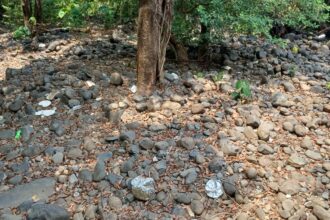
Garbage has always been a big concern for Goans. Unfortunately nobody seems interested in finding a solution and so the problem continues. Be it on the beaches, in parks or public place and not to mention residential areas, heaps of garbage everywhere has become an eye sore and a problem that just keep growing.
But when will this menace end? Can there be an end to the growing garbage problem in Goa? Or will it continue for years to come, resulting only in disgust and despair?
Clinton Fernandes from Calangute, who has served Royal Caribbean Cruise in photo department since 2005 to 2011, has travelled across the globe, and has been a keen observer of cleanliness in several countries. During his service onboard the ship for 7-8 months, he wondered how some countries could handle garbage issue and maintain sanitation around the place.
Fernandes, who quit his job in 2011 and started photo booth service in Goa, was deeply hurt seeing garbage being littered on the beaches, besides other public places and decided to take the initiative of cleaning up the mess.
“Somebody has to do it,” he says, “and we are inclined to wait for the authorities to do it. But lastly, it is obvious that they cannot do it.”
“We end up just waiting for someone to clean the filth all around the place,” Fernandes said, adding that the filth will not disappear overnight unless someone take the bold step and moves forward to do something about it. For if we do not it will only continue and increase over a period of time.
Fernandes laments the good old days when Goa, Goans and all those who came here had a sense of cleanliness and maintained cleanliness all around, including the beaches and other public places that were cleaner and the menace of garbage was well-maintained. “But today, people don’t realize how grave the situation is. During those good old days, we could easily roam around bare foot, but it is no longer safe today,” he says with a sigh.
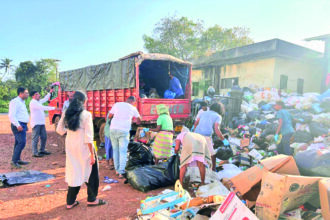
The first cleanliness drive under the leadership of Fernandes kicked off at Verem Reis Magos beach on August 26, where he revealed that around eighth bags of chappals and shoes were collected. The second drive was at Caranzalem beach on September 2 and at both the places the average turnout was around 60 people, with new faces joining in.
Besides, the cleanliness drive which will continue on beaches to create social awareness on regular basis, Fernandes also intends to form a team ‘Clean Up Goa’ which will move to every village or locality and the concerned citizens there will take up the project of cleanliness.
Presently, Fernandes has around 100 volunteers hailing from Canacona to Bicholim and majority of them come from Panjim to Mapusa.
When it comes to dumping garbage in open public places, Fernandes says people have no foresight and the drive and they aim to cover public places like parks, bus stands, besides those which have scenic beauty.
Specialized in Fine Arts, Fernandes also enjoys designing catchy slogans to make his novel initiative more effective. He prepares attractive slogans to create social awareness through social media that he believes it is very powerful.
Till date, Fernandes has uploaded his slogans on Facebook, WhatsApp and Instagram and the response has been overwhelming. But he regrets that while the response has been very good online, not much had changed on the ground in terms of volunteers.
He felt that there were many people involved in similar cleanliness drives across Goa, but he was in need of more dynamic and outstanding people, who would like to take steps for cleanliness. “There are leaders and followers, but the quantity of the former is depressingly low,” he adds.
In order to generate funds and be properly organized in the maiden project, Fernandes plans to get the movement registered as an NGO. Right now people volunteer by getting gloves and garbage bags, he says.
Website ‘Keep Goa Clean’ is already registered and we hope to get funding from corporate, donors and volunteers, he points out. Other issues to be tackled include open defecation, proper recycling of plastic and others related to the society at large.
“People won’t wake up until the ocean starts screaming and people always wants someone else to give a start, for others to follow,” says Fernandes.