The Lok Sabha was told that 48 km of the Goa and Karnataka coastline comes under the coastal vulnerability index. The statement in Parliament had also that a third of the country’s coastline is eroding at varying rate of changes as per a study over a 28 years period based on satellite images.
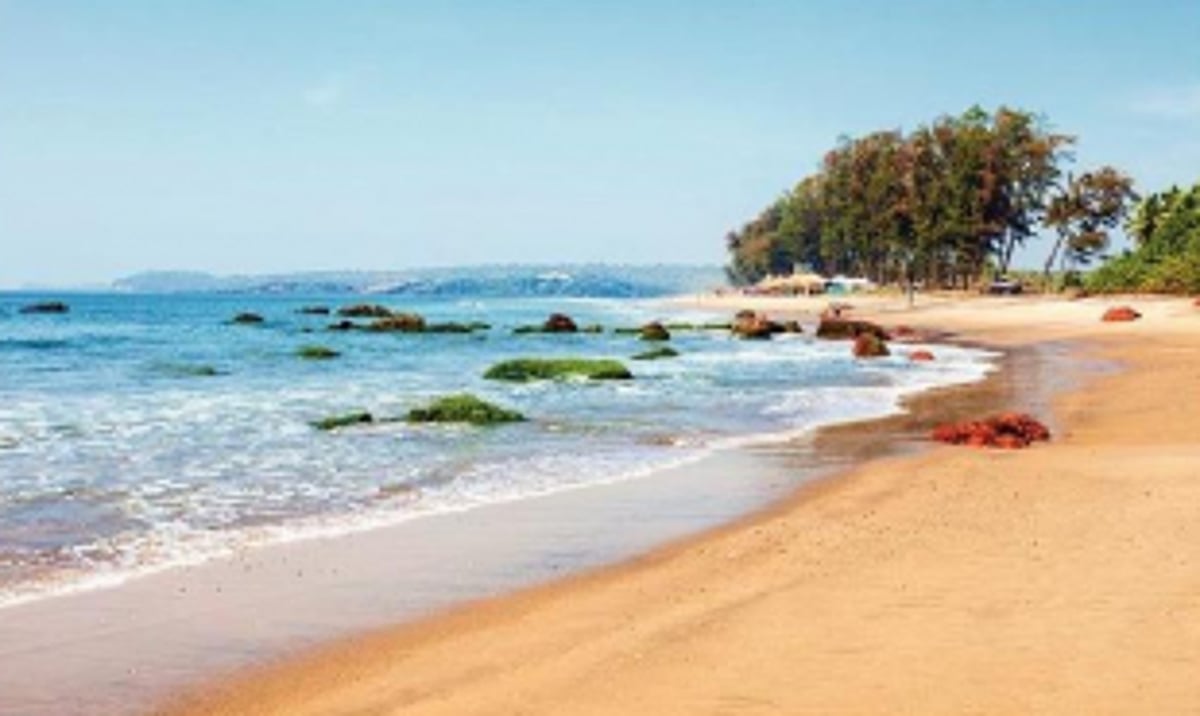
It is quite a revealing statistic that of Goa’s 140 kilometres shoreline almost 12 per cent has been eroded since 1990, but the good news is that another 20 per cent is accreting, and that around 68 per cent is in stable condition. Erosion has been seen along the coast of Keri, Vagator, southern part of Calangute, Mandrem to Morjim, Candolim in North and Palolem, Talpona, North of Galgibag and from Varca to Cavelossim in the South. On the other hand, accretion has occurred in Majorda, Velsao, Arossim, Utorda, Colva, Morbor, Betul in the South and Calangute, north bank of Chapora river and along the coastal stretch from Harmal to Mandrem in the North.

What the study does reveal is that the threat to the coast exists. There is also accretion but the erosion cannot be overlooked. So, if there is a threat, shouldn’t measures be taken to stop further erosion of the coastal areas?
This is one report, there are others that have predicted by when the coastline could go underwater. In August last year, the National Aeronautics and Space Administration (NASA) of the United States had predicted the Mormugao town will be among the cities and towns on the west and east coasts of India that is in danger of being submerged by up 2.7 feet of water by the year 2100. That report had also listed a number of other towns that would be submerged around the same time. It would therefore, be foolish to believe that the rise in sea level will be restricted to Mormugao and spare the rest of coastal Goa.
Goa’s entire coast is in danger of erosion, submergence and these reports are merely confirming what the climate change and environment activists have already warned about. The changes in the coastal regions and the climate patterns cannot be ignored for much longer. These are reports from agencies based on studies and analysis by experts. Governments cannot disregard them as they do with the claims made by activists. It has to be understood that the changes to the topography are not going to occur at some future date but that they are already happening now. Unless they are reversed or slowed down, the changes could prove disastrous to the State.
Goa, last year, went through the cyclone Tauktae that caused devastation in May and then floods in July that had not been experienced for four decades. Both weather phenomenons are rare in the State. There is plenty of evidence that climate change has begun to manifest in the State, and Goa has to initiate measures to mitigate it. It is pertinent to note that in the sustainable development goals report released in 2021, Goa was below the national average for climate change mitigation.
Erosion of the coastal regions is not an unexpected occurrence or one that has arisen only now. Goa has been experiencing this for years and there is photographic evidence to prove it. Unless immediate measures are taken on a slew of connected issues, this will not end. The good news of accretion can only last for a short while, so it is imperative that the erosion is stopped. Measures are required on an urgent basis to save the coastal areas of Goa. Any delay will only be at the cost of the coast. It is too big a risk to take.