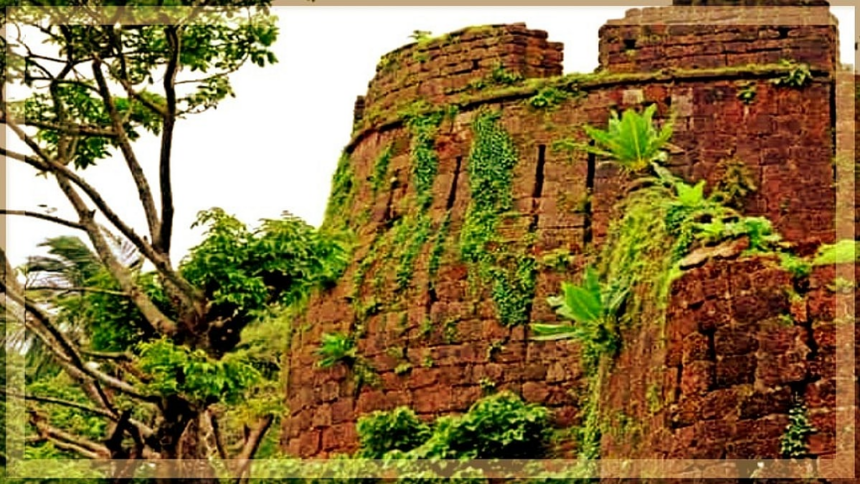
Built in 1624, the fort was designed primarily to protect the busy Mormugão port and the essential coastal waters from possible dangers. Situated at the shoreline, it offered a clear vantage point of the Arabian Sea, establishing it as a crucial outpost for observing and defending against any adversarial threats beyond the harbor.

The magnificence of the fort should not be overlooked. Encompassing an extensive perimeter of approximately 10 kilometers, Mormugão Fort emerged as one of the most remarkable and formidable fortifications established by the Portuguese in Goa. Its architecture featured a complex arrangement of elements, including five prisons, three magazines, a chapel, and a total of 20 bulwarks, all accommodating a committed garrison.
What distinguished Mormugao Fort were its two mysterious fountains – the Fonte de Malabar and Fonte de Santo Ignacio. Folklore suggested that these fountains drew their waters from a gold mine and a sulphur mine, respectively, infusing the fort’s already rich history with an additional layer of intrigue.