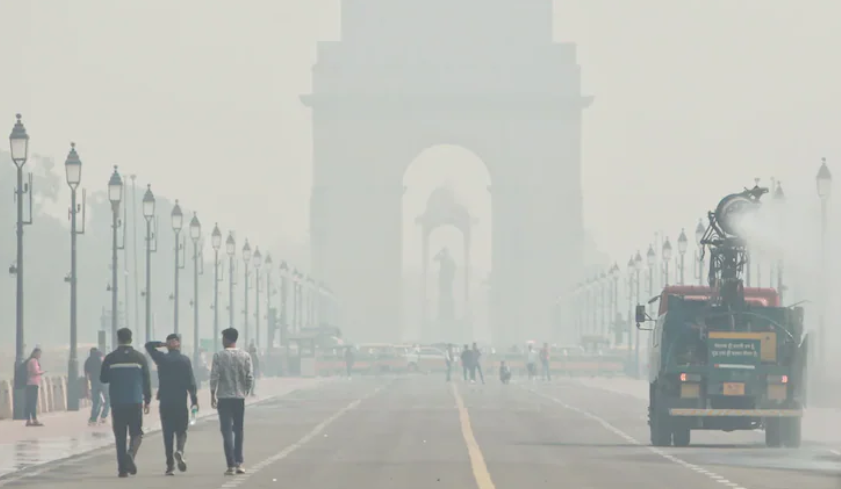
Delhi’s annual struggle with toxic air has intensified, with the city once again enveloped in hazardous smog. Central Pollution Control Board (CPCB) data shows that Delhi’s 24-hour average Air Quality Index (AQI) surged from 130 on October 1 to a staggering 428 by November 11, before slightly easing to 327 on November 26—still categorized as “Very Poor.”
While stubble burning in Punjab and Haryana is often blamed for Delhi’s pollution, Decision Support System (DSS) data from the Ministry of Earth Sciences suggests a more complex picture. Early October farm fires contributed almost nothing to Delhi’s pollution, but by October 17, their share rose to 2.62 per cent as the AQI crossed 250. November saw sharper spikes:

- November 12: Farm fires accounted for 22.47% of pollution, with AQI reaching 418 (“Severe”)
- November 18-20: Contribution fluctuated between 5.4% and 2.8%, yet AQI remained above 325
These figures indicate that stubble burning plays a significant role during peak smog days, but is not the sole contributor.
Other Major Polluters
DSS data highlights additional sources of Delhi’s air pollution. Cities surrounding the capital, including Gautam Buddha Nagar, Gurgaon, Karnal, and Meerut, contribute 29.5% of the toxic air. Vehicular emissions account for 19.7%, while residential emissions (4.8%), peripheral industries (3.7%), and construction dust (2.9%) add to the mix. Alarmingly, 34.8% of pollution originates from unidentified sources, making effective mitigation challenging until these sources are traced.
As Delhi continues to battle hazardous air, experts emphasize the need for targeted action on multiple fronts, from regional crop burning control to traffic management and industrial regulation, to safeguard public health.
(This story is published from a syndicated feed)