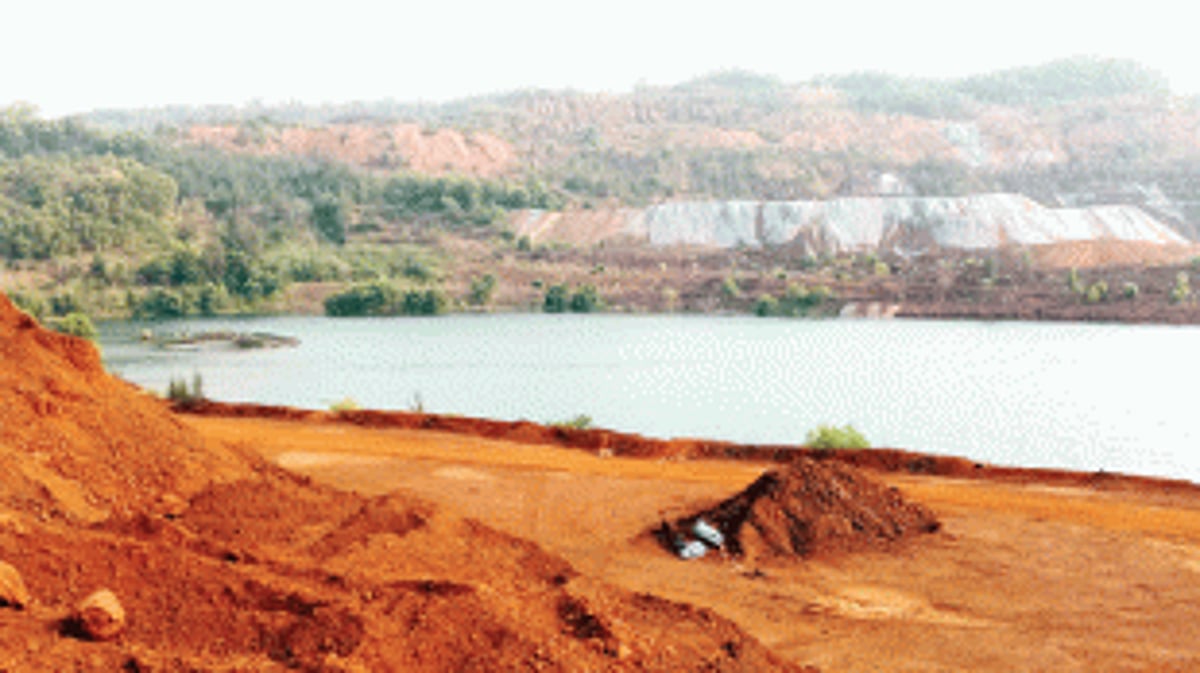
The life in the mining belt can be grossly divided into two – one before the closure of the mining industry and another after. And when we speak about the closure, it is the ban which was imposed in September 2012, and not the latest one.
The State’s biggest source of revenue and industry with the potential of being one of the important employment resources has been in the doldrums since 2012. Though the Supreme Court lifted the ban on the industry in the year 2014, the people living in this belt admit the industry never started in a big way. This in fact helped several dependents to look for an alternative source of revenue in their villages.
More so, the youth, realising the mistakes committed by their successive generations, opted to get educated and settled for private jobs, ensuring there is flow of income at home to take care of their daily bread and butter. Some even tried their luck for small business like that of cafeteria and eco-tourism resorts, which are fetching good revenue. All thanks to Chief Minister’s Rojgar Yojana.
The trucks lined up along the road side, corroding mining machinery and unusual silence are the highlights of the iron ore rich mining belt right from Bicholim, Sanquelim, Navelim, Kudnem, Honda, Sonshi, Dignem, Velguem up to Pali in North Goa.
Similar is the situation in Sanvordem, Sanguem and Quepem area. One of the biggest mining leases at Codli too has an eerie silence with no much activity around it. The ancillary industry around these mining leases is taking the last few breaths and if this situation continues, it will die a natural death.
What seems to be blessing in disguise is that the current generation of the truck owners had not joined their fathers in the business. “They got educated and then searched for their own job. We are happy to see that they chose not to get into the business related to mining,” Ramchandra Gaonkar, one of the truck owner, who was part of the infamous agitation in Panjim on March 19, said.
It is this younger generation in the service sector that has become the bread earner for the families, saving it from facing penury. “I am working in a car showroom in Verna. I am happy as today I can take care of my family. I spoke to my company manager and got my brother also a job in the company showroom in Margao. My brother is a mechanic and had a shop at Tisk Usgao where he used to repair trucks. He was jobless since 2013,” Ramesh Satoskar, 24-year old 12th pass from Usgao said.
“I got a job in the showroom in May 2016. I got my brother into service in January 2017. He is happy and sometime imagines what would have been his future today considering the crisis,” Satoskar states.
Realising that during summer, Goans drive to the State’s hinterland to get respite from the soaring mercury and humidity, with families rushing to the river fronts for a deep, a group of three friends Uday, Rohit and Mangesh from Sattari decided to take this opportunity and got into eco-tourism venture.
The 2012 mining ban, gave them an excuse not to go into transportation business, which was the source of livelihood for their families for nearly two decades.
All the three childhood friends, through a self employment loan under Chief Minister’s Rojgar Yojana, jumped into eco-tourism business and set up two farms. “The business did not pick up well initially and we were into losses. But we never gave up as there was no hope of revival of mining industry. As the years passed by, our joint venture started picking up, with both locals and tourists preferring to stay in farms during the summer season,” Mangesh said.
The mining ban has also resulted in few of the dependents turning back to their farms. While cultivation of paddy fields is difficult, the farms which were neglected by them are getting much needed attention. Many have also opted for odd-jobs in the farms.
“The areas of Velguem-Pale were a green patch and known for betalnut cultivation. The mining industry had reduced their productivity. But the sudden closure since 2012 has once against brought life back in the farms,” says Shantaram Marathe.
He claims that the production has been increasing, but the major problem is that there is no adequate water to irrigate the farms. “The rivulets have dried out. The mining companies have wreaked havoc on the water table. Somehow we are managing to irrigate our farms but proper water supply can do wonders,” says Marathe who firmly believes that “farming can be an option to mining.”
There has been one major impact on the social life of the people due to closure of mining industry. The migrant population, which had come here as drivers or helpers on the trucks or to work with the contractors, have gone back to their hometowns. What is left back is actual Goan population or some of the old migrants who have already gelled well with the culture and ethos of the area.