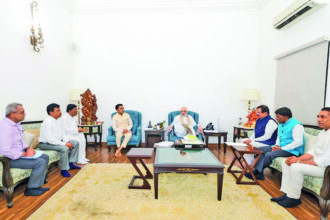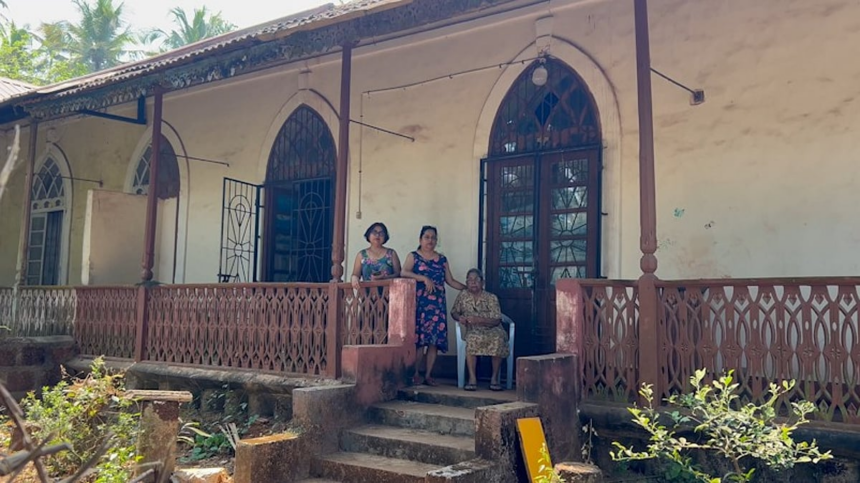
When one meets the families living in 400–500-year-old heritage homes that line the traditional Right of Way opposite the railway tracks in Primeiro Vaddo, Velsao, one encounters faces full of dejection, hearts weary from their ongoing battle with the railways, and minds filled with anxiety about what comes next.
These centuries-old structures, which have weathered time and change, now face an unprecedented threat to their existence.

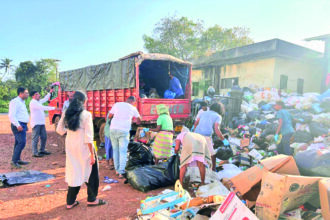
Over the last couple of weeks, railways have dumped truckloads of mud in front of these homes, with rubble piling up against compound walls. Some walls have cracked under the pressure, while other portions were forcibly broken down by railway machinery, forcing owners to rebuild them.
The residents are now effectively landlocked—homeowners cannot move their vehicles out of their compounds, and even walking out of their homes has become a precarious task.
Senior citizens must carefully navigate loose rubble that sits at an elevation higher than their compound ground, performing a dangerous balancing act just to enter their homes. Young children need assistance to leave their houses, as the height difference has made it impossible for them to step out independently.
The situation has worsened despite numerous complaints to various authorities and the Velsao panchayat’s stop-work order demanding the removal of the dumped material.
At the heart of this crisis lies a dispute over land ownership. Villagers possess documents proving their ownership, while the railways have failed to produce title documents. Even with pending cases at both the Inspector of Survey and Land Records (ISLR) court and the District Court in Margao, construction continues unabated.
Orville Dourado Rodrigues, founder of Goencho Ekvott (GE), points to the historical roots of this conflict.
This was a road long before the Western India Portuguese Railway arrived in the 1890s. Our ancestors used it for their horse and bullock carts. Now, the Railways are suddenly claiming it as their land through adverse possession. But the irony is that this dirt road has been used by locals for generations for access to their homes. If anything, it is the villagers who have adverse possession over this strip of land, not the Railways
Orville Dourado Rodrigues – Founder , Goencho Ekvott
The landowners possess Portuguese-era legal documents (Inscription/Description) issued by the Revenue Department of Goa, which clearly describe their parcels of land as having either a road or railway tracks as their eastern boundary. “Back in the 1990s, when the railways shifted from narrow gauge to broad gauge, people did not object—we coexisted peacefully,” Orville notes.
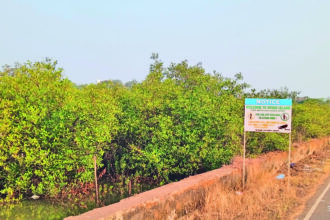
“It is only with this double-tracking project that there has been so much upheaval. Primeiro Vaddo is the first village, and the monsoon water flows from here to neighbouring villages and out into the sea or River Sal. The destruction of the natural water bodies here won’t just affect us—it will disrupt waterways across the region,” Orville added.