It isn’t tough to spot Sushant. His towering presence among his team members at an E-waste collection drive conducted in Socorro, makes him visible even from a distance. On probing further about waste and the measures in place for Goa, his passion for the environment seems in equal proportion to his stature. Having done his Masters from The Energy and Resources Institute (TERI), Sushant worked in Mumbai before returning to Goa and put his skills to use for the betterment of his home state.
Being an environment consultant, Sushant wants to drag E-waste and biomedical waste up the ranks and bring it within people’s radar to help them understand the dangers and toxicity in our environment and bodies owing to this. Most of us dispose of our mobile phones and other electrical devices by selling it to a scrap dealer. But, as per the E-waste Management Rules, which were notified in October 2016, manufacturers of electrical equipment are mandated to collect and return these to authorised dismantlers or recyclers that have systems in place to scientifically dispose of this waste. Heavy metals like mercury, lead, cadmium, chromium – if not properly handled and disposed, can leach into the environment as toxic waste which then gets into our food and water giving rise to diseases like Cancer.
Explaining his involvement, Sushant elaborates, “Karo Sambhav which translates to ‘Make it Possible’ is one of India’s leading Producer Responsibility Organisation, which means that they work with producers and are funded by them in order to meet their ‘Extended Producer Responsibility’ targets. It has a countrywide presence and partners with globally trusted brands like Microsoft, Lenovo, HP, Apple, Dell, Xiamoi among others. We help these companies stay compliant by running awareness campaigns to setting up collection channels, collecting waste and sending it for responsible recycling, thus completing the full cycle. The big factor is that no other operator in Goa represents producers. The process with Karo Sambhav is fully accountable and transparent, via a specially created App, which is the first of its kind in India.”
In Goa, Karo Sambhav has a MOU with the Goa Waste Management Corporation (GWMC) and through this initiative, Sushant, who is their Goa representative has undertaken awareness campaigns in over 25 schools and colleges across Goa. “Considering Goa generates an estimated 7000 tonnes of E-waste per year, it is heartening that GWMC will soon be coming up with a dismantling facility in Goa,” adds the young Aldona lad.
Sharing his findings, Sushant says, “Goa is a tricky state and behaves differently given its higher income and education indicators. We receive 75 per cent of E-waste from households and 25 per cent from offices and other bulk industries which in other states is the opposite. There is a greater awareness in Goa but unless we have the right collection process, a big challenge is that people tend to give their E-waste to the informal sector like trash collectors.”
“Offices and industries who constitute the bulk consumers are getting more responsible and transparent through proper reports submitted to the State Pollution Control Board; and The National Green Tribunal (NGT) has made a huge difference in enforcing rules, adds Sushant.
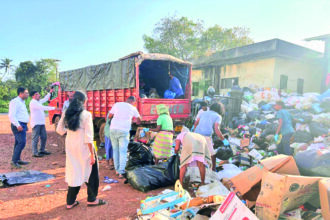
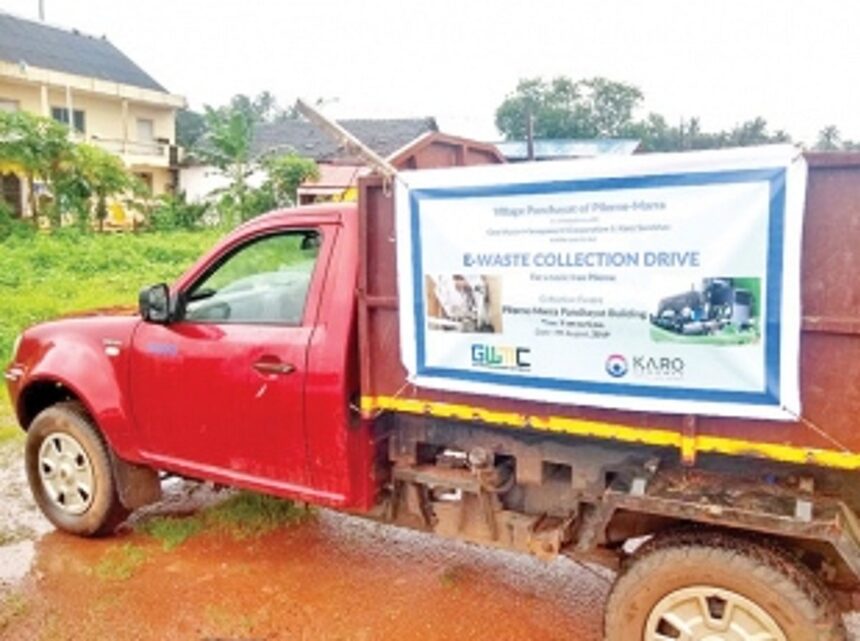
The recent drive at Socorro garnered 590 kilos of E-waste – a heap of mobile handsets, TVs, mixer-grinders, remotes, bulbs, tubelights, batteries, cables, chords, microwaves, computers and other paraphernalia. Sushant quips, “We accept everything that works on electricity and conducts electricity.” These drives are conducted along with village panchayats and the intention is to have it regularly. Individuals like Raj Parandikar, founder of Arjuntree, a real estate company based in Margao have organised collection drives as part of their CSR initiative. The remuneration they received from Karo Sambhav for each of the items was then donated to NGOs in Goa. Similarly, colleges and social organisations like Lions Club and Rotary Club have jumped into the fray and hold their own drives.
By his association with Toxics Link – a Delhi based environment NGO that has been appointed by the state government to set up a bio medical waste facility in Kundain, with an incinerator to treat 200 kgs of yellow category waste per hour. Sushant and his team were instrumental in documenting over 900 healthcare facilities, assessed current practices on waste disposal and estimated the daily quantum of waste generated in Goa besides also looking at the best technology options available for treatment. Sushant elaborates, “Deep burying of medical waste is infectious and toxic and if burning this waste exacerbates air pollution besides being hazardous and toxic.”
Sushant is hopeful for the future and rightly believes that the environment is the next big ‘thing’. To Goa’s youth looking at environment studies as an option, he avers, “This field holds tremendous scope and impetus. Green is the new buzzword. There is so much to be done. We need technology for waste treatment, solar energy panels. From biodiversity assessments, waste management, green buildings to upcycling and process management, this sphere opens up a lot of opportunities.” He adds, “And the best part is that you’re contributing to positive change that directly impacts our planet.”