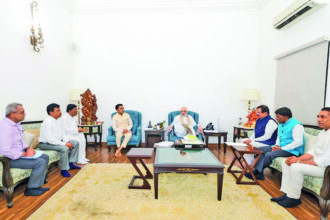
Herald: We are here to discuss an issue that is extremely contentious and important. The sad part is that the fiasco over the Regional Plan is as consistent as the monsoons. Every year, the monsoons come and go, and the issue of the RP comes up, but is never really settled. We’ve come to the fag end of the BJP’s tenure, which is going to end before March 2017. We have a situation where the foremost promise made by this government of denotifying the RP2021 to replace it with a people-centric plan with studies in place, has been the biggest betrayal of the BJP government in the last five years. And the government is planning to reintroduce a plan that has supposedly been kept on hold. The new or revised plan is going to be introduced not with improvements, but with more ills and more irregularities and more injustices. Attempts were made to get government representatives for this debate, but they refused.
Herald: Claude, could you identify and underline the betrayal of the government?
Alvares: When planning first started in Goa in 1986, the whole plan of how Goa should look was based on what the people had done over centuries. The first regional plan respected the fields, forest and beach areas; it respected the fact that you do not put up constructions in these places, you don’t tamper with water bodies, paddy fields and khazan lands. Based on this structure, the 1986-2001 plan was constructed. It was a reasonably good plan, and if it had been maintained for some time, we would have had something. In 2001, we had the Monseratte plan, which put a blanket on the original plan and completely ruined it. The Monseratte plan said that whoever paid money could put up anything anywhere. That led to a big revolt and the plan was cancelled. In 2008, the Charles Correia committee and many others came out with an extraordinary plan, which everyone said was something good and it should be notified. It was notified as a draft plan in 2008, and immediately after, because people found that the plan was not suitable for developers and industrialists, they sat together and set up a separate committee to see how they could try to put in all the proposals that were discarded earlier under new labels. They brought in eco-resorts, micro-industrial development estates and so on. With that, they began the process of dismantling the Charles Correia plan. There has constantly been an effort to demobilise the environmental planning of Goa as it has emerged over the centuries. The people are not in sync with this, but the government, which is in the pockets of developers, is constantly on the look out to see how it can permit people to put up things where the land use does not really support them.
Herald: In 2012, the BJP government was voted back to power primarily on various issues. We thought the BJP would set right what the Congress did wrong. They probably began on the right note by saying that they would denotify the plan. How can the government go back on that solemn promise to denotify the plan?
Pinto: That is the major betrayal that people are facing. This government has been on a U-turn spree. On most of the issues that they have taken up, they are basically saying one thing, collecting votes, and then doing a U-turn. They have kept the RP in cold storage for four years. Now before the next election, they are collecting a few more votes by saying that they have kept their manifesto intact.
Herald: When we look at the flaws of this exercise that the government is carrying out, have certain basic studies and data not been collected? Could you elaborate on this?
Prabhudesai: This exercise is being conducted under the Town and Country Planning Act. Under Section 10 of this Act, the Chief Town Planner has to first collect the environmental, social and economic data. It’s obvious you can’t do planning without data. You need to know where you are today so that you can decide where you want to go. Since Liberation, we have been extremely poor in terms of collecting information and data. It is the first responsibility of the government to keep records of where we are economically, socially and environmentally. We have absolutely nothing. Some of the most important elements are the flooding data. What will happen to Goa is a flood takes place? We don’t have any data on flooding in Goa. Similarly, in terms of our water resources, we have not done a single hydro-geological study that will tell us where our water is and how much we have. We don’t know which of our fields are cultivated, where our money comes from. The RP fails to acknowledge that we have so many Goans working outside Goa, who send back a lot of money. It should reflect in the economic data. All that the RP says in three places is that Goans don’t like to work. Before you take a decision, you must have all the data and facts.
Herald: As an architect, will you agree that ultimately this RP has actually become a real estate plan and it is essentially a playing ground for builders?
Sadhle: There is no sincere effort to really have a plan. So many years have passed, and we have been discussing how everything will be. It is just playing with the dates. There may be some mistakes or problems in the plan, but having no plan is something miraculous for such a small region like Goa. We have enough data to have a rough idea of what the plan should be like, but there is no direction. My main area of concern was conserving water bodies, which are being polluted. The Environment Protection Council passed a resolution that water bodies should be protected and a no-development zone should be earmarked around all water bodies to protect them. After nearly seven years, no action has been taken in that regard.
Herald: There are two plans right now: the 2021 plan in abeyance and the 2001 plan being partly opened. How have both plans been manipulated to ensure that those who had to get conversions done, managed to do so.
Alvares: There have been many changes, even in the 1986 to 2001 plan. There also politicians realised that they could make a lot of money. Before 1986 you did not have to go to any planning authority, but after 1986, you had to go. If you wanted to build something on an orchard area, you have to go to the TCP. From 1986 to 2001, several changes were made in the RP while it was in force. Every change brought them money. Then they realised that they had enormous power. They realised that unless the zoning was changed, people would not be able to do anything because the TCP would not give permission. That’s when they realised that if they wanted to really milk the Goan public for cash, the best thing was to keep the RP, but keep on tinkering with it wherever they want. So they managed to change quite a bit. There was only one Chief Secretary who stopped it. She said that plots could not be changed constantly, and only zones could be changed, if possible and with justification. After that it all stopped. Then they got an opportunity to put in a new plan. The planning started in 2001, when it should have started in the 90’s. It begins after the plan is no longer in force and they have a lot of time to make changes. They start making changes and notifying them and get the whole plan changed considerably. It’s not that it started only with the new plan. It started from 1986.
Herald: Abhijeet, many people say that there has been manipulation. They have kept the plans open and done things through the backdoor. Could you just elaborate how somebody has managed to take advantage of both the plans?
Prabhudesai: Like Claude has pointed out, it’s through these gazetted changes that were done after the RP2001, that the requirement of vested interests who want to make a lot of money through changes in land use, have been satisfied in the past. Those guys are already in the game and they have already paid money and gotten the land displayed however they want. In 2001, after everyone completed the work and put up a good plan and sent it to the Chief Town Planner, he colludes with the same people who had introduced those gazetted changes and again makes changes in the zones that they want, and then does many more changes.
Herald: How do you establish this collusion?
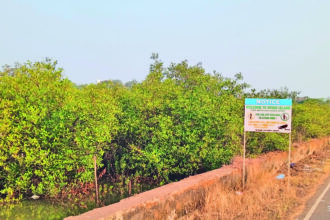
Prabhudesai: In Curtorim, we have forested parts of Monte Hill that were brought in as settlement zones in RP2001, removed from settlement by the task force and brought back to the forest zone. Then when the plan wet to the Chief Town Planner, he put in a 10-metre road and brings in lakhs of metres of forest land as settlement land. This is in 2021. Builders are cutting the forest and there are forest offences against them.
Herald: I’ll get into two other crucial aspects: one is eco-tourism, the other is the Investment Promotion Board. Eco-tourism is the crux of the whole game, and suddenly eco-tourism zones were introduced into the plan at the fag end of the Digambar Kamat government’s tenure. The previous Chief Minister has washed his hands off it and said his objective was to promote eco-tourism, but we know how such projects have come in and continue to come in. If you speak about your experience of what the eco-tourism zones actually are and they’ve done.
Alvares: Right now, we are fighting the Tiracol golf resort, which is also an eco-tourism resort. It is located on agricultural land that is tenanted. It’s been given permission as an eco-resort, which means 10 percent of the area they can build. They got permission first for some 40,000 sq mts under that 10 percent. After that it mysteriously increases to 1,76,000 in the next meeting. They have got 9,00,000 sq mts approved for the golf course. You begin in a small way, and then you keep on expanding and expanding. Like the liquor factory, they want to put up a brewery and a distillery. The brewery does not require environmental clearance, but the distillery requires. So what they do is they put in a proposal for a brewery first. They get those approvals, and once that happens, they put in an expansion plan and bring in the distillery. They tell the officials that the brewery has already been approved and they are only adding one more thing to it. That’s how they operate.
Pinto: The eco-tourism is a backdoor king of thing. I feel that we have to work on the RP. The IPB and eco-tourism are coming from the backdoor. So our attack is basically going to be on the RP. Finally these have to have a place in the RP.
Prabhudesai: Eco-tourism is basically a tool only to bring in settlement zones where they cannot be brought in. The Town Planner is also worried about public perception, so he doesn’t want to paint it all yellow. But he wanted a way to satisfy these big interests and wanted to do it in a way that wasn’t very visible. For this reason, in the final notification, they have brought in an eco-tourism policy within the RP. Bringing in an eco-tourism policy within the RP itself is itself ultra-vires because the Forest Department is responsible for eco-tourism, like in the rest of the country and world. If you see the policy, it says that you need to have a minimum of 2 lakh sq mts of land to start eco-tourism. If you compare this with the United Nations’ guidelines for eco-tourism, there are six principles. This violates all the six principles, because eco-tourism must be carried out by the villagers. A seven-star government is being constructed in Loliem on forested, tribal land. It’s the exact opposite of eco-tourism.
Herald: From eco-tourism, we’ll quickly jump to the IPB. From the time the IPB came into play, it seems to have taken over and superseded virtually every aspect of planning. As a planner and architect, do you sense that? If this continues to happen, how will the planning process get subverted?
Sadhle: This is not a subject I can speak much on, but I can certainly talk about eco-tourism. Eco-tourism means retaining the ecology of the place and using it in such a way that the ecology is undisturbed.
Alvares: The IPB is the new RP for Goa. All the important projects are now being approved by the IPB. Even the same liquor factory put in an application before the TCP as well as IPB or approval. They got approval from the IPB and then withdrew the application from the TCP. That’s very significant. It means that the TCP today is the IPB. These guys are approving large-scale projects. Once these projects are approved on that scale, then what will be kept for the RP is peanuts. They will be used to harass people and collect money from them as well. Once you allow the IPB to continue in the way it has been designed, which is once the IPB grants permission all other acts will not prevail, then you got a new planning body.
Herald: Abhijeet, the IPB Act says that all other planning processes are subverted, but there is a section in the Act by which the secretaries of the departments also have to adjudicate.
Prabhudesai: It’s quite interesting. Maybe this has been done because the people who were drafting the Act know that it is ultra-vires. They know that it will not stand a legal challenge. In Section 7 (c), it is said that the local laws will not apply, and in Section 7 (d), it says that the secretaries of the departments will implement all the local laws.