A large contribution to the planning and design of almost 14 international civilian and military airports across the world was by a Goan.
All this and more is revealed in a biography titled Rain Drops that celebrates the life of Joseph Rufino Cordeiro, son of Saligao, a man of extraordinary intelligence and abilities. The book, a collaborative effort by his wife, Lira, and daughters, Lucinda, Mary Anne and Francesca, commemorates a life well lived with a career spanning the continents of Asia, Africa and Europe.

The book traces Cordeiro’s early childhood in Africa and Goa, financial obstacles to his education, which he managed to complete nonetheless, his brush with the Indian struggle for independence, his exceedingly remarkable career, his relationship with his future wife and their marriage, and his last days, including the launch of the Joseph Rufino Cordeiro Foundation.
Cordeiro strikes one as an exceptionally compassionate man, who lived his life for others, be it family, friends or strangers. A man inclined towards altruism while possessing a brilliant mind is indeed a rarity in our day and age.
The trajectory of his career is fascinating. A polymath with a wide range of intellectual interests, Cordeiro completed his formal education acquiring an MSc in Electronics. Among his earliest jobs was that of a navigational engineer at the private airport in Gwalior for the Holkar family of Indore, before moving to East Africa, the land that offered opportunities to Goans in the 19th and early 20th century.
Cordeiro was chief engineer at the Nairobi airport where he was in charge of the installation and maintenance of the newly-introduced ILS (Instrument Landing System), VOR (Very High Frequency Omni-directional range), and DME (Distance Measuring Equipment).
The family’s history is also told through historical events such as the change of land laws in Goa post-1961 and Cordeiro’s visits to Saligao to maintain his Goan roots as well as safeguard family lands. The book then follows the family’s exit from Kenya to the UK, a decision that was made under duress due to the Mau Mau uprising by the Kenyans against the British authorities.
Their first January night in England left the Cordeiros bewildered; the bitter cold was a shock to their system. This was a far cry from the bright, picturesque images of England they had envisioned. The family huddled together in one room, in as close proximity as possible, with paraffin heaters on at full capacity and all windows and doors shut. Needless to say, they would have better survived the cold than the carbon monoxide poisoning that nearly killed them. Rufino Cordeiro proved their saviour, using his last ounce of strength to drag himself downstairs and get help.
Now settled in London, Cordeiro was involved in the radio and navigational design of airports in Brunei, Sharjah, Abu Dhabi, Muscat, etc, as a senior engineer for International Aeradio Limited (IAL). His last assignments at IAL were meteorological surveys at military airports on the islands of Mauritius and Batavia (present-day Jakarta).
Cordeiro then lent his intellectual prowess and vast experience to international aeronautics firms such as Rohde & Schwartz, Munich; Standard Elektronik Lorentz, Stuttgart, and so on. His assignments included airports in Nigeria, Malawi and the setting up of a control centre at Basrah, Iraq.
Eternally tinkering away at mending, building and creating, Cordeiro invented and patented a meteorological measurement system called ‘Digimet’ for digitally measuring wind speed and direction. Despite not having any financial backing, he was able to manufacture and sell three Digimet units – each priced at 3,000 pounds – to customers. One pauses to consider the scope of innovation this man might have been able to achieve with the appropriate funding.
The book is an easy read and presents the life of Rufino Cordeiro with the accompaniment of photographs, which makes the experience visually pleasing and provides insight into life in a bygone era vividly. Rain Drops is a succinct biography that leaves you wanting to learn more about this wonderful Goan who makes us proud to belong to the same heritage. Perhaps a second edition could be a more comprehensive biography. It would undoubtedly be a lengthier and more arduous undertaking, but it would be one worthy of a man of such intellectual and impeccable moral stature.
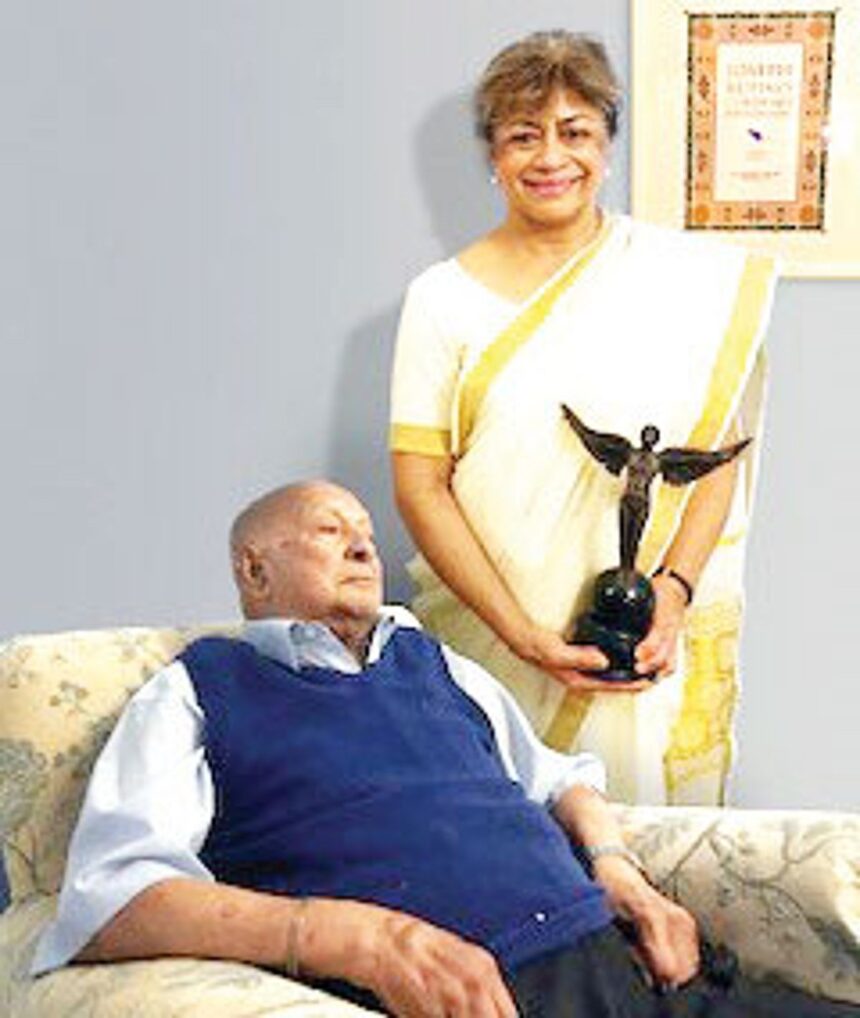
It is but comprehensible that the conclusion to Cordeiro’s life would be one of self-giving to the grave and beyond. The establishment of the Joseph Rufino Cordeiro Foundation, now headed by Mary Anne Cordeiro, is Cordeiro’s legacy to future generations, encouraging them to build a better world by promoting the key disciplines of science, arts and sports. Individuals excelling in their chosen field (be it science, arts or sports) will receive the Joseph Rufino Cordeiro Award for Excellence.
The foundation offers the Golden Wing scholarship to individuals in the field of aviation or aerospace, comprising funds for independent research. It also has as part of the foundation the Goan Nightingale Corps, inspired by St (Mother) Teresa, which offers training in nursing to young women. Further information regarding various aspects of the Joseph Rufino Cordeiro Foundation are available on the website www.jrcordeirofoundation.org or you can contact Mary Anne Cordeiro at [email protected].
I leave you with the words of Joseph Rufino Cordeiro, the man himself, “The greatest art in life is the science of giving, and to give sportingly is my life’s journey towards fulfilment.”