In the year 2018, there was hope that the year 2019 would help the sagging fortunes of Sanjivani Sugar Factory turn a much needed corner. In the year 2019, all eyes were on the much anticipated crushing season that takes place in November and there was hope that the year 2020 would offer the anxious sugarcane farmers a fresh start.
Alas! The plan did not go according to script and while there is a new alternative plan that has been presented, the fact remains that for the first time in 45 years, there was no crushing season, which is the most important part of the sugarcane factory’s functioning. Promises have been made in the past, but the farmers have gone beyond accepting lip service and want to see things moving on the ground and not just in theory.
After all, the farmers depend on the government-run Dharbandora factory to earn an income for their hard work cultivating the sugarcane crops.
And so it certainly wasn’t music to their ears to first hear the government talk about replacing machinery and making the existing factory work and then to turn around and say they won’t do it as it’s not feasible for them to do so. For the government, the factory has been bleeding money and the cumulative losses over the years had crossed Rs 100 crores.
It may be recalled that the farmers had earlier launched agitations after they feared that the government had plans to shut down the factory. Sanguem MLA Prasad Gaonkar had even threatened on the floor of the house of the legislative assembly to carry out a hunger strike on the streets of the capital city. He also held meetings with the protesting farmers who had staged a dharna outside the factory’s premises to oppose any plans to close the factory.
Following that, the Co-operation Minister Govind Gaude had several meetings with the farmers and assured them that the government would accept all the sugarcane production even if the factory had to miss one or two crushing seasons.
However, after a brief period of calm, the farmers couldn’t shrug of that feeling of uncertainty and a series of problems worried them further. They decide to launch yet another agitation with their various demands.
Chief Minister intervenes
Finally, a high-level meeting was convened wherein Chief Minister Pramod Sawant, Deputy Chief Minister and Agriculture Minister Chandrakant Kavlekar, PWD Minister Deepak Pauskar, Sanguem MLA Gaonkar, Co-Operation Minister Gaude, government officials including those from the WRD department met the Goan sugarcane farmers at the factory’s premises in the presence of Farmers Association President Rajendra Desai. After giving them a patient hearing to their grievances, Sawant assured to address their main demands on priority basis. He further asked them to continue their sugarcane production in the coming years irrespective of the gap in crushing seasons and that the government would buy all the harvested sugarcane and send to a factory in Khanapur, Karnataka. He also added that the famers who suffered losses due to the rains will be compensated suitably.
What was equally pleasing to the farmer’s was the CM’s promise to solve the water problems faced by them, which included visiting their crops in Sanguem. That and the fact that he approved to hike the wages for labour for harvesting sugarcane to Rs 600 from Rs200 per tonne.
Allegations of mismanagement
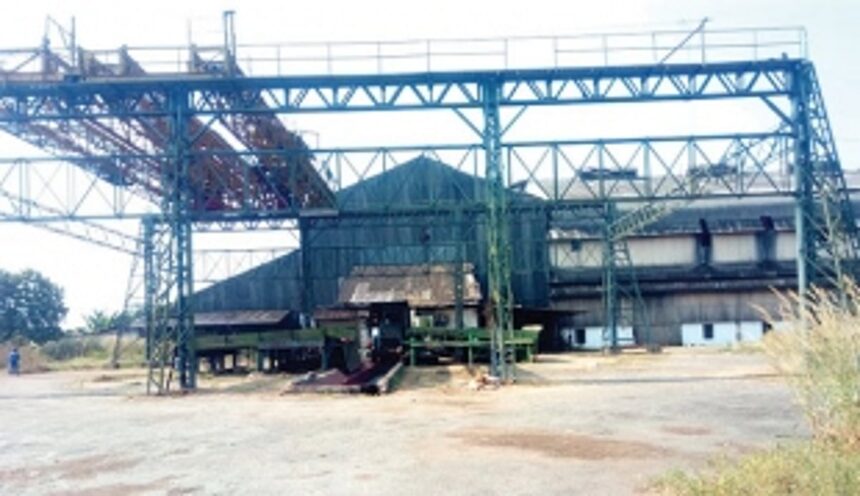
According to several stakeholders, the root of the problem lies with the mismanagement of the factory over the years. They believe that the current malaise could have been avoided had the present and erstwhile governments not neglected the administration. For instance, they wonder why the same old machinery that has been lying at the factory for years had not been replaced or modernized.
Another classic example they talk about is what had happened with the Central Pollution Control Board (CPCB). In November 2018, the farmers were in panic-mode after CPCB had issued a closure notice to the factory for its failure to install a pollution control system as directed. What troubled them greatly was that this jolt came around the same time as the crushing season of that year and they feared the worst, given that it meant that months of their hard work and sugarcane produce would go to waste. After it finally installed the system, the CPCB permitted the crushing season, which began almost a month late.
Farmers however, were annoyed that the government had not done what was required earlier given that the CPCB had alerted them in 2017 to install the continuous monitoring system for effluent and stack emission under the Environment Protection Act.
State of affairs
The Sanjivani Sugar factory began in the year 1972 at Dayanandnagar, Dharbandora and except for a few years, it has been suffering a loss of Rs 2.5 crore per year. This has been a constant source of worry to the 1,200 sugarcane farmers. The factory also provides livelihood to thousand farmers from Karnataka. While the Goan farmers supply around 37,000 metric tonnes, their neighbours provide around 50-55,000 metric tonnes.
The farmers have been demanding a thousand rupee hike in the supply rates. Currently, they get around Rs 3,000 to 4,000 per tonne, which they say is not affordable due to the rising costs. They have also been demanding payments on time.
Another complaint the farmers have is regarding the shortage of water supply, which they say is the main cause of the decline in production figures. They are also concerned about the nuisance caused by wildlife, which affects their production levels.
At the factory, the 250-odd employees, which include the contract workers, are governed by the wage board based on which, their salaries are paid to them. They too have been demanding for a salary hike and had even held a protest on the same issue,
However, they received an assurance from Gaude after he took charge of the Co-operation –x-x-Department that he would look into their demands.
The Stakeholders version
Sugarcane Farmers Association President Rajendra Desai said he welcomed the government’s recent decisions.
“After this, we are waiting for ‘Achhe Din’. We assured the government to increase our sugarcane production every year. They also assured that the bills will be cleared 15 days after the supply of sugarcane to the factory.
He added that the farmers face difficulty in harvesting sugarcane and that the government has promised to supply additional workers to the farmers to cut the sugarcane free of cost.
Regarding water shortage issue, he pointed out that the government assured to resolve this issue by forming an inter-department committee, which will ensure that water supply to the sugarcane crops is not affected.
When asked about the decline in their production levels, Desai said initially they were producing as high as 90,000 tonnes but over the years it has decreased to just 37,000 tonnes. He further added that they had assured the government to try and reach the target of 50,000 tonnes.
“Earlier we were worried but now we are excited and happy that the government is promising to take the necessary steps for the rejuvenation of the factory, “ Desai added.
‘Avoid past mistakes’
The Gomantak Mazdoor Sangh (GMS) General Secretary Puthi Gaonkar said the factory needs better management if it wants to move from a loss-making unit to a profit-making one.
He opined that the key to success would be in ensuring that corruption is eradicated and that the management team is run by quality and resourceful persons. “Sanjivani needs a better technical engineer and a Managing Director who has knowledge about agriculture,” he added.
He recalled that over the years, Sanjivani suffered losses even though it should have been making profits.
He also questioned why the vast amount of land lying idle at the factory’s premises has not been put to better use so as to earn much needed revenue.
He recalled that a former administrator had taken the initiative to set up a petrol pump at the premises and that they had supported this decision. Besides that, he said the land can be used for agriculture-related purposes. Further, given its proximity to the road, the land can be used to construct a shopping complex, a truck terminus and even ethanol production plant, which he felt could provide additional revenue.
Co-operation Minister speaks
Co-operation Minister emphasized that the farmers are the backbone of the country and that their interest and welfare is his priority.
Elaborating about what went wrong, he said the farmers need to produce and supply more sugarcane to bridge the huge gap between the amount the factory needs and how much it currently gets. Citing figures, he said that the production should increase to at least 60,000 tonnes in the next two years and explained that no amount of plans to revive the factory would have been possible if they did not receive the requisite amount of sugarcane.
“The farmers assured to increase their production once the government ensures improved water supply to their sugarcane crops,” Gaude added.
Gaude further listed the promises given by the CM and also the reasons that were given for closing down the factory. Gaude also revealed that they have initiated the procedure to appoint a consultant who would study the project’s viability, technicality and feasibility report.
“We are stressing upon how farmers will get the maximum benefit from the new sugar factory project,” added Gaude.