‘Home remedies and change in peoples habits’
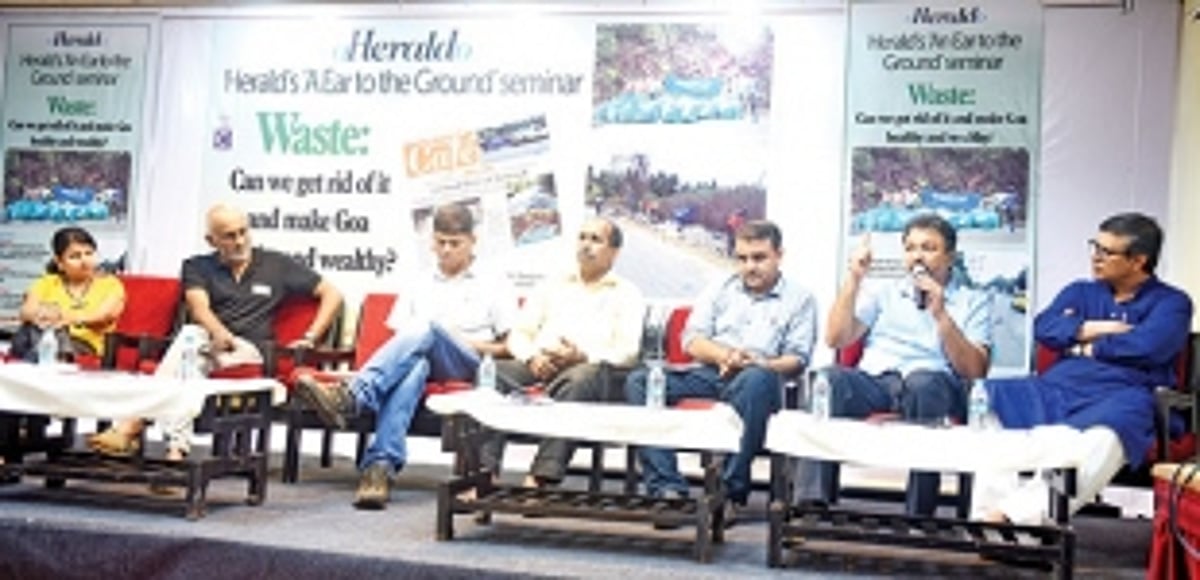
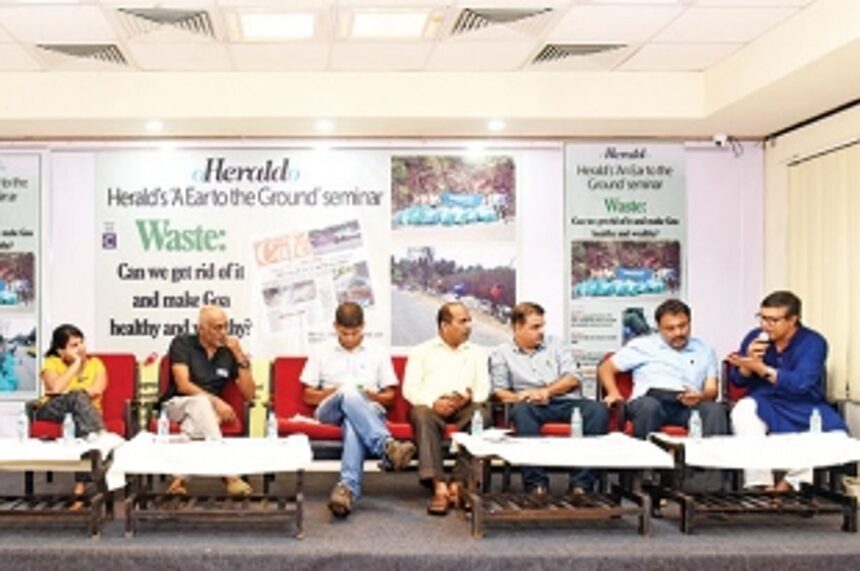
There was a lot of interaction from the audience along with a long discussion on all the garbage problems followed by brainstorming for solutions.
Black Soldier Fly Larvae Technique
Eleuterio Carneiro begins the second segment by sharing the home remedies and useful ways of garbage solutions from their Navelim Panchayat. They collect garbage that is mostly dry waste, recyclable and non-recyclable. The collection vehicle goes every fourth night. He says that they have planned to let the vehicle now collect the waste every week. Wherever there is recyclable waste, they sell it to the ‘radi wala’, but they too are not authorized. They have made a list of all the nearby areas in Navelim and asked them not to sell in places where it isn’t authorized. “We ask them to bring it to the panchayat. We have developed a strategy where they buy the recyclable waste at 5 rupees and then give it to the panchayat, and then the panchayat can give it through a proper channel. For wet waste, it is composting at site. Our panchayat in 2017, implemented rules whereby all the households were asked to compost wet waste at the site. When we say this, they reply saying they do not know and have never done it before. Hence we have organized workshops, every three months,” he added. One technology that the Navelim panchayat, has been successfully working on is the Black Soldier Fly Larvae technique for the wet waste. So they have had national workshops regarding the same.
He briefly explains that they have 25 per cent of standard tribe population who are usually involved in farming. “We have developed a programme where once the larva eats the wet waste enough, they can remove and feed it to the backyard poultry birds. They can get daily eggs, they can get organic manure for the agricultural purposes. This is what we thought. The second solution, which we came across, is using bio-digesters, and biogas for cooking. Some of the vermin-composting areas we have started using the ‘Black Soldier Fly Larvae’ techniques,” he added.
Solving garbage problems at household level
Clinton Vaz: “Once the segregation is done we can move to the next steps. Organic waste has to be managed at the source, because the cost of collecting and treating it is costly. It makes more sense because you can use this. The best way to deal with your waste is to give it to animals. There’s no technology more efficient than animals eating it. Almost all the hotel waste in Goa goes to some form of piggeries or other. Villages in Goa don’t often suffer a lot of garbage problems because they have a lot of animal pets and farm. If one cannot feed animals then the option is to go for composting. It’s simple and low cost. You can have a composting place built for oneself under a thousand rupees today. I generally deal more with composting because I have more experience with it. There is a challenge in learning how to compost because if composters do not run well, it will smell or get overloaded. So you need some kind of training but the advantage is that its hygienic, it goes straight from the bin to your garden. You’re getting free soil fertilizer, zero transport, no cost of truck. 160 villages out of 189, have some form of dry waste collection in Goa. If this is encouraged, it will be good. Just keep giving your waste to the local panchayat. They will do the right thing. This way you have solved the problem at the household level. “
Clinton said that he still receives complains of no door to door collection in some places or that it is not frequent enough. “There are also private recyclers. There are nearly 1000 recyclers around Goa. Everyone knows the scrap-yards and we call them a nuisance, but they are the ones clearing out the industrial estates, they are the ones servicing the commercial establishments… Some years ago, we decided to document this and this is an open source thing where we called it the Goa waste management atlas. Find the geo location of the nearest recycler to you, get his number, call him or even go to that location and give your recycled waste. The information on Google map of finding recyclers around their area has been added by the people of Goa themselves. Even all the government treatment plants are located there, along with phone numbers, there are also food banks,” added Clinton.
Bio-Digesters
Samruddh Desai’s company started in 2014 with a lot of passion than business sense. Their company focused on solid waste management by a single solution of biogas. Coming from an engineering background he thought food as a source of energy. “If you give 100 kg of food waste you get only 10 kg of compost, whereas when you convert it into biogas it will convert into entire net positive where you can generate power. We started with that in mind but we also looked at other options of treatment. We did liquid waste management,” he added.
Richard Dias: “Today, I am part of a startup called fly catcher technologies. I started my journey with waste as resident, at that time composting seemed to be like the only solution. Samruddh mentioned that bio-digesters or biogas is a better solution. The question is why should we use a technology which is less efficient then something that is more efficient?
These bacteria are very finicky guys, every one degree change in temperature the efficiency of those bacteria reduces by ten percent. So often then; these bio-digesters- when it gets too cold or too hot, they stop working. And we are still feeding it so it goes acidic and when it goes acidic it stops working altogether. Then everyone says bio-digesters don’t work.”