Dolcy D’Cruz
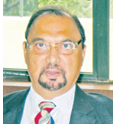
Sahitya Akademi, New Delhi, had commissioned Jyoti Kunkolienkar, the Goan writer, playwright, actress, and filmmaker, to produce a documentary on the life and works of Uday Bhembre. The screening of the documentary, ‘Shri Uday Bhembre – The Voice Of Konkani’, will be held on March 27 at 5 pm at LBKPPS Hall, Ravindra Bhavan, Margao, jointly hosted by Sahitya Akademi, New Delhi, and Ravindra Bhavan. The event will be attended by Daulat Hawaldar, former Election Commissioner and Finance Secretary of Goa, Fr Mousinho De Ataide, Konkani writer, and Anju Sarkardande, a committee member. The documentary is produced by Sahitya Akademi, New Delhi, and directed by Jyoti Kunkolienkar, who was earlier awarded the Sahitya Akademi Bal Sahitya Puraskar for her novel ‘Mayuri’. “There is a certain standard set for a Sahitya Akademi documentary. We had to keep editing the f ilm to suit their requirements. The documentary is in English. There are two formats: a shorter 27-minute version and a longer one-hour version. The YouTube version of 27 minutes will be uploaded on March 27. Besides Uday Bhembre talking about different aspects of his life, Dr Kiran Budkule speaks about his Konkani literature, Dr Hanuman Chopdekar about the Konkani movement, and Manoj Kamat about politics,” says Jyoti, who was assigned the project in June 2025. The documentary highlights Uday Bhembre’s writing career and contributions to Konkani literature, while also covering his involvement in the Opinion Poll, the Konkani movement, his tenure as MLA, journalism, and other public work. “Sahitya Akademi primarily focuses on literature and language, but we specifically asked him about the Opinion Poll because he was very active during that period and also because he was an MLA at the time. He began his journey in journalism to raise awareness about the Opinion Poll and later the Official Language movement. Our coverage traces his life from the very beginning, starting with his childhood. His father, Lakshmikanth Bhembre, was deported to Portugal due to Goa’s freedom movement when Uday was only five years old, and we explore how those early experiences shaped him,” says Sampada Kunkolienkar, who interviews him in the documentary. The narrative moves through his childhood, college years at Siddharth College, Bombay, his work at All India Radio, and then his return to Goa during the Opinion Poll. It chronicles his journalism, efforts on the Official Language issue, contributions to Sahitya Akademi, and continues into recent years, highlighting his YouTube presence, activism, and ongoing engagement up to 2025. “I reached Bombay in 1957 after SSC because there were no colleges in Goa before Liberation. At that time, the center of the Opinion Poll Jyoti Kunkolienkar movement was in Bombay. There was no freedom of association as this was pre-liberation. It started almost in 1910 in Bombay. There were Konkani mandals in about 15 colleges. Goans, Karwaris, and Mangaloreans all came together and formed these Konkani mandals. That was the point where I got initiated into this movement. Then I worked for All India Radio in Bombay for some years,” informs Uday, who received his first major recognition in 2015 when he was awarded the Sahitya Akademi Award for his Konkani play ‘Karna Parva’. In 1963, when the Rashtramath paper was started to oppose merger, Uday returned to Goa. He reminisces, “I resigned from All India Radio and came down to Goa. And then it has been a life of agitations, action, conflicts. I was 26 years old then, and probably today, among those who actively worked during the Opinion Poll, almost the whole generation has passed away. I was the youngest of the lot at that point.” His entry into politics was, by his own admission, entirely accidental. “I had never imagined a political career for myself, fully aware of my own limitations. For a long time, I consciously stayed away, including during the Goa Opinion Poll. However, in 1984, circumstances changed. After repeated refusals, I finally agreed to contest, a decision that led me to the Legislative Assembly. My tenure coincided with a turbulent and historic period. During the movement for the Official Language Bill of Goa, I found myself f ighting on two fronts: inside the Assembly, where I and a colleague formed a small opposition, and outside, where the agitation continued. In the Assembly, there were two of us—Luizinho Faleiro and myself—simultaneously leading the agitation outside. In the middle of that term, Goa became a state. I was elected as a member of the Legislative Assembly of the Union Territory of Goa, Daman and Diu. After two and a half years, the Official Language Bill was passed and we got statehood in 1987. So, we became MLAs of Goa State. I had to take oath again as the MLA of the state. A feature which is rather rare in somebody’s life,” says Uday. Speaking about the making of the documentary, Jyoti says, “We relied entirely on photographs, and all the footage—including aerial shots of Margao and the beaches—was captured by our own cameraman. We also sourced some archival images from the Central Library, but the majority of the photographs used were provided by Uday himself. He even shared his college ID card, which added authenticity to the project and made our work much easier.” “I have a habit of preserving anything I think might be useful in the future. Before computers, we used to make blocks of photographs. I was in Rashtramath for about five years and thereafter in Sunaparant for about 12 years. After making the block, they used to throw the photographs in the dustbins. I used to collect them. Those photographs remained with me and that habit continued. Whenever there were any functions and somebody sent me a photograph, I preserved it. I also normally keep a copy of my article published elsewhere. In fact, there was no need to search for them because I have maintained albums of those photographs back from the Opinion Poll days until recently,” says Uday. Uday will also highlight Sahitya Akademi schemes for writers at the screening. “Sahitya Akademi has a scheme to make documentaries of authors belonging to the older generation because they know that once they pass away, it will be difficult to know their views on certain points, as then one would have to rely only on what they have written. Here, there is an opportunity to talk to them and to know their views and their creative process. Every year, they pick one or two senior writers from each language and assign an experienced person to make a documentary. Another scheme for Konkani is called Makers of Konkani Literature. They select the oldest people, who may be with us today or may no longer be alive, and get monographs of 100–125 pages written on them. These are printed, normally in English, and then translated into the other 23 recognized languages, ensuring that writers in one language, like Konkani, are accessible to readers across India. It is also more engaging, allowing audiences to see the writer speak, hear their voice, and experience aspects of their personality that text alone cannot convey,” concludes Uday Bhembre, who is currently working on his next book, expected to be the first political novel in Konkani.

THE ORIGINS OF ‘CHANNEACHE RATI’
Uday was working at All India Radio in 1957, where a half-hour Konkani program aired both in the morning and at night since 1952. Of this, ten minutes were reserved for news, while the remaining twenty minutes featured plays or, more often, music. Even before he joined, specific days had been allocated for kantaras, from tiatr or independent songs while others focused on Hindustani classical-based music. This programming led to frequent complaints. To address this, the staff decided to mix both styles within the same program. The twenty-minute segment was divided to include both forms. However, this only led to further dissatisfaction. The issue remained unresolved during Uday’s time there, but the experience stayed with him. Later, when he returned to Goa, Uday reflected on the need to bridge this cultural divide, not only in music but also in theatre. Uday first shared one such song, ‘Channeache Rati’ informally among friends, where it gained appreciation and began to spread especially during the Opinion Poll. “After the Opinion Poll, Ulhas Buyao said I would like to get it recorded by His Master’s Voice. The company’s office in Bombay informed him that he was not an auditioned artist and, therefore, if he wished to record the song in his own voice, he would need to guarantee the sale of 300 copies and pay the amount in advance. When he shared the condition with the group, we decided to contribute collectively to cover the cost of 300 records. With this support, he went to Bombay and recorded the song as a duet,” reminisces Uday. The song went on to become widely popular and continues to be sung even after 50 years