
Goa’s evolution into a digitally connected society has transformed how children learn, communicate, and interact with the world. Smartphones, social media platforms, and online educational tools are no longer optional—they are embedded in daily life. For young users, the internet offers unprecedented opportunities for learning, creativity, and social connection. However, beneath this progress lies a growing and complex concern: the rise of cybercrime involving children. What is unfolding in Goa is not merely a law enforcement issue but a broader societal challenge shaped by rapid technological adoption, gaps in awareness, and evolving patterns of behaviour among young users. ANIL KUMAR MISHRA reports

A changing face of cybercrime

Recent incidents in Goa reveal a shift in the nature of cyber offences. In Margao, a man was arrested for allegedly creating a fake social media profile of his former girlfriend and posting morphed images. In another case in Panjim, school students reportedly circulated edited videos targeting their peers.
Such cases reflect a critical transformation: Cybercrime is no longer confined to anonymous hackers or organised networks operating from afar. Increasingly, it involves known individuals—friends, classmates, or acquaintances—who exploit digital platforms to harm others. Motivations often include jealousy, revenge, peer pressure, or the desire for attention.
This shift makes cybercrime more personal and, in many cases, more psychologically damaging. Victims are not just dealing with unknown attackers but with people they trust or interact with regularly.
The numbers: Small State, growing concern
Data from the National Crime Records Bureau (NCRB), as presented by the Ministry of Home Affairs, highlights an upward trend in cybercrime cases in Goa.
*36 cases in 2021
*90 cases in 2022
*86 cases in 2023
While these numbers may appear modest compared to larger States, the sharp increase between 2021 and 2022 and the sustained levels thereafter indicate a growing vulnerability. Experts caution that the actual figures are likely higher due to underreporting, particularly in cases involving minors, where stigma and fear often prevent complaints.
National trends reinforce this concern. Across India, cybercrime cases rose from 52,974 in 2021 to 86,420 in 2023, reflecting the expanding digital footprint of the population and the corresponding rise in online risks.
Even more alarming is the surge in cybercrimes targeting children. NCRB data shows that such cases increased from 232 in 2018 to 1,823 in 2022, nearly an eightfold jump. Cyber pornography emerged as the most significant category, with cases rising from 44 to 1,171 during the same period. Incidents of cyber stalking, bullying and online harassment have also steadily increased.
Children at the epicentre
Children and adolescents are particularly vulnerable in the digital ecosystem. Their increasing independence online is often not matched by awareness of risks or consequences. Common cyber offences involving minors include:
*Sharing and circulation of morphed or explicit images
*Cyber bullying and online harassment
*Creation of fake profiles and identity misuse
*Blackmail using private or sensitive content
A large proportion of these cases involve image-based abuse, where personal photos or videos are manipulated or shared without consent. Such content can spread rapidly across platforms, making it difficult to contain and leaving lasting emotional and reputational damage.
In many instances, these incidents originate within peer groups, intensifying their impact. The combination of social pressure and digital exposure creates a volatile environment where impulsive actions can have severe consequences.
The post-pandemic digital surge
The COVID-19 pandemic played a significant role in accelerating children’s engagement with digital platforms. Online classes, virtual interactions, and increased screen time became the norm. While this ensured continuity in education, it also created what experts describe as a “high-access, low-awareness” environment.
Children gained access to devices and platforms at an unprecedented scale, but digital literacy and safety awareness did not keep pace. Many began navigating social media independently, often without adequate supervision or understanding of privacy risks.
This sudden shift left a gap—one that cyber offenders, including peers, have increasingly exploited.
Technology: A double-edged sword

The same technological advancements that empower users also enable cybercrime:
*AI-driven tools can create highly realistic fake images and videos
*Editing software allows manipulation of content with minimal skill
*Anonymous accounts make it easier to hide identities
*Encrypted messaging platforms limit oversight
*Viral sharing mechanisms amplify damage within minutes
In this environment, even a single act—such as sharing a private image—can spiral into widespread distribution, often beyond the control of both the victim and the perpetrator.
A key misconception among young users is the belief that deleting content removes it permanently. In reality, digital material can be copied, stored, and redistributed indefinitely.
Government response and institutional measures
Recognising the scale of the challenge, the Government of India has strengthened its cybercrime response framework under the Indian Cyber Crime Coordination Centre (I4C). Key initiatives include:
*Establishment of National Digital Investigation Support Centres
*Cyber forensic laboratories in Delhi, Hyderabad, and Assam
*Expansion of Central and State forensic capabilities
*Financial assistance of Rs 116.5 crore under the Cyber Crime Prevention against Women and Children scheme
The government also operates the National Cyber Crime Reporting Portal ([https://cybercrime.gov.in/](https://cybercrime.gov.in/)), which allows citizens to report cyber offences online, including those involving minors. A dedicated helpline, 1930, provides immediate assistance, particularly in financial fraud cases.
Additionally, awareness initiatives have been scaled up through collaborations with educational institutions and organisations such as CBSE and NCERT. Cyber hygiene programs have reached thousands of students across the country, emphasising safe online practices.
Policing and preventive awareness
Highlighting that awareness is a key line of defence, a senior official from the Cyber Crime Branch of Goa Police said, “We regularly create awareness about what to do, what not to do, and how to respond if someone finds themselves in trouble. We strongly advise women not to share personal photos, videos, phone numbers, or addresses on social media platforms. There are instances where people may be asked to share OTPs—this should never be done, as it can lead to accounts such as WhatsApp being hacked. This, in turn, may give miscreants access to personal information, photos, or videos, which can be morphed and misused. They may even resort to blackmail using such content.”
“If any untoward incident occurs, it can be reported at https://stopncii.org/](https://stopncii.org/). Anonymous complaints related to bullying, harassment, or stalking can also be lodged at [https://cybercrime.gov.in/](https://cybercrime.gov.in/). In the case of minors, we advise parents to use parental control applications and maintain master access. This ensures that parents are notified whenever a child downloads an app. We also encourage people, especially children, to accept friend requests only from known individuals, keep their profiles private, and verify the authenticity of accounts before accepting requests. Personal photos and videos should never be shared or forwarded,” the official said.
The behavioural dimension
Despite technological and legal measures, experts emphasise that the root causes of cybercrime involving children often lie in behaviour and social dynamics. Common patterns include:
*Sharing personal content within relationships
*Succumbing to peer pressure for validation or acceptance
*Acting impulsively in moments of anger or jealousy
*Underestimating the permanence of digital content
These factors highlight the need for a cultural shift in how digital interactions are perceived. Online actions must be treated with the same seriousness as offline behaviour.
Role of parents and educational institutions
Addressing cyber risks requires a collaborative approach involving families and schools. Experts argue that supervision must evolve into meaningful engagement.
Parents need to understand the platforms their children use, maintain open communication about online experiences. Encourage responsible behaviour without creating fear while schools, on the other hand, must integrate digital literacy and cyber ethics into curricula, conduct regular awareness sessions and provide safe channels for reporting incidents.
Children are more likely to seek help when they feel supported rather than judged. Building trust is therefore critical.
Policy developments in Goa
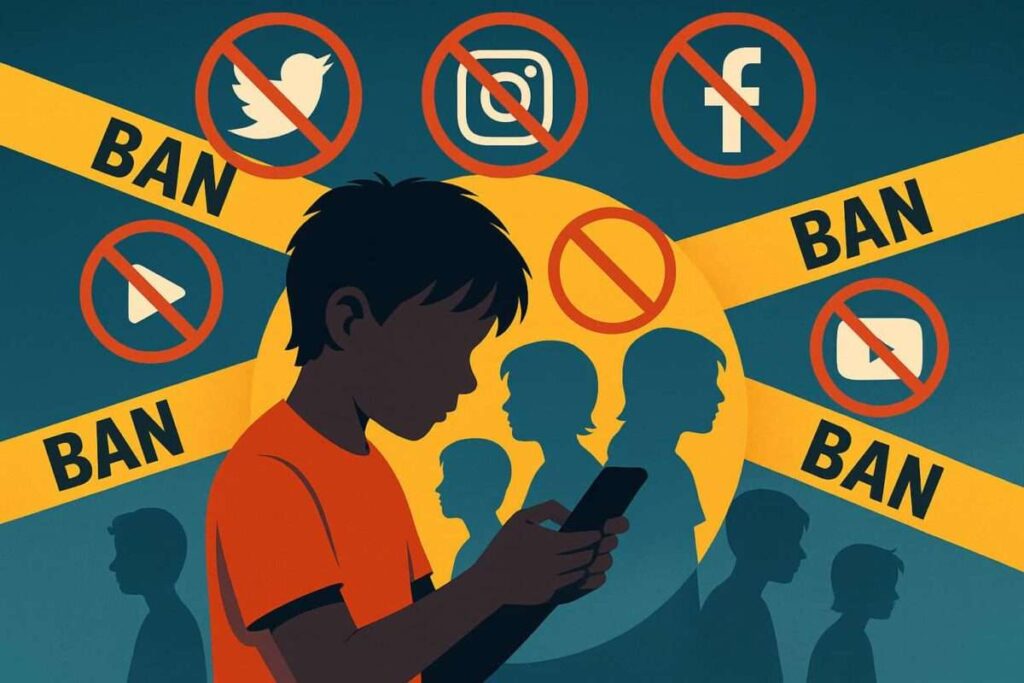
The Goa government has begun exploring regulatory measures to address digital risks among minors. IT Minister Rohan Khaunte has confirmed that a policy document proposing restrictions on social media access for children under 16 has been finalised and will be submitted to the Central government.
The proposal reflects concerns that certain platforms may negatively impact young users without contributing to their development. It also signals a shift toward more structured regulation of children’s digital engagement.
In parallel, Goa is positioning itself as a technology-driven State through its draft Artificial Intelligence Policy (2026). Released for public consultation, the policy focuses on AI skill development among youth, support for startups and innovation ecosystems, improved governance and public services and safe and responsible deployment of AI technologies.
The policy emphasises accountability and safety, ensuring that technological advancement does not come at the cost of user protection, particularly for children.
Goa’s unique context
Goa presents a distinct combination of factors that influence cybercrime trends like high smartphone penetration among young people, strong social media culture, exposure to global digital networks due to tourism and limited specialised cyber forensic resources
These elements make the State particularly susceptible to emerging digital threats while also highlighting the need for localised strategies.
Prevention as the only sustainable solution
Cybercrime involving children is no longer an emerging issue—it is an established reality of the digital age. Goa’s experience mirrors national trends, where increased connectivity is accompanied by increased risk.
The defining challenge of cybercrime is its permanence. Once content is shared or misused, it becomes extremely difficult—often impossible—to fully remove it from the digital ecosystem.
This makes prevention the most effective strategy. Awareness, responsible behaviour, and early intervention are far more impactful than reactive measures after harm has occurred.
The rise of cybercrime against children in Goa reflects a broader transformation in society’s relationship with technology. While digital tools have created new opportunities, they have also introduced new vulnerabilities—particularly for young users navigating complex social environments online.
Addressing this issue requires a comprehensive approach: stronger enforcement mechanisms, informed policymaking, active parental involvement, responsible educational practices, and widespread digital awareness.
Ultimately, the internet is a powerful tool—but one that demands caution, responsibility, and understanding. For children growing up in this connected age, learning how to navigate it safely is not optional; it is essential.
In the digital world, actions are permanent, consequences are far-reaching, and prevention remains the only truly reliable safeguard.