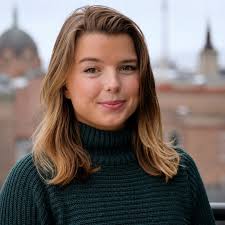
The controversy surrounding Norwegian journalist Helle Lyng and Prime Minister Narendra Modi has triggered a wider debate on press freedom and political accountability. The issue began after Lyng attempted to ask PM Modi a question during a joint media appearance with Norway’s Prime Minister. Shouting, “Why don’t you take some questions from the freest press in the world?” she drew immediate attention online. Although it was unclear whether Modi heard the remark, his exit from the room quickly became a talking point across political and media circles.
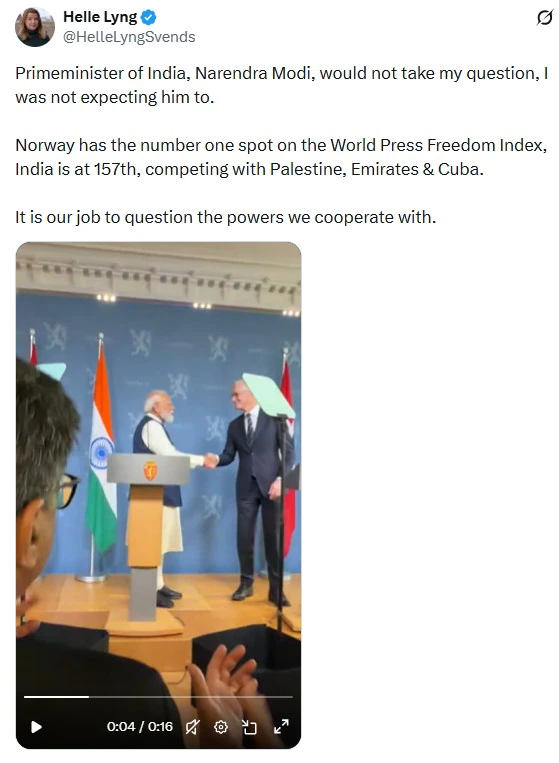
Lyng later defended her actions on social media, pointing out that Norway ranks first on the World Press Freedom Index while India ranks much lower. The incident escalated further when the Indian Embassy in Norway invited her to a later press briefing. During the interaction, Lyng questioned India’s human rights record and democratic image, leading to a tense exchange with MEA Secretary Sibi George. Clips of the heated interaction soon went viral online.

Spotlight Turns on Helle Lyng
As the controversy grew, attention shifted toward Lyng’s background and social media activity. Critics accused her of being politically motivated, with some users labeling her a “foreign plant” and questioning her previous articles praising China and President Xi Jinping. Others highlighted that her X account became verified shortly before the incident, fueling conspiracy theories online.
However, many defended Lyng, arguing that journalists have the right to question political leaders. Opposition figures, including Rahul Gandhi and Mahua Moitra, criticized PM Modi for avoiding press questions. Meanwhile, BJP leaders dismissed the controversy and accused the opposition of politicising the matter.
The episode has now evolved beyond a single question at a media event, becoming part of a larger political and social debate about media freedom, public accountability, and the role of journalism in democracy.