It was a victory after a battle that had lasted a couple of years and taken the lives of seven lads, but then and now the formula adopted by the Legislative Assembly did not appear to be the best for Goa. It was, however, politically the best, appeasing both warring factions, but a formula that now threatens to disrupt the status quo and the peace of the last 29 years.
The movement for official language was rather unique. When the reorganization of States, based on languages, was done in 1956, Goa was still under Portuguese rule and a Konkan State was not among those created. Goa’s first election brought the Maharashtrawadi Gomantak Party (MGP) that rode to power on the plank of Marathi and merger of Goa with Maharashtra.
The desire and need to have an official language had been simmering for a while and in the 1984 elections to the Legislative Assembly two political parties unsuccessfully sought to ride to power on this issue. Both were new parties – Goa Congress and Bhausaheb Bandodkar Gomantak Party – formed out of factions that had broken away from their parent parties Congress and MGP respectively. Congress won that election and Pratapsingh Rane was elected as Chief Minister. MGP was in the opposition.
Adhering to the promise it made to the electorate, the lone Goa Congress MLA Luizinho Faleiro tabled the Goa, Daman and Diu Official Language Bill 1985, which was defeated on July 19, 1985. It was supported by Faleiro, Independent MLA Uday Bhembre and Congress MLA Francisco Monte Cruz.
In the same month, the entire Konkani fraternity came together under the banner of the Konknni Porjecho Avaz (Voice of the Konkani People) and the leadership of, then a young Konkani writer, Pundalik Naik. The people took to the streets demanding that Konkani and not Marathi be made the official language of Goa. That turned the smouldering embers into a flame, leading to massive meetings in Margao and Panjim.
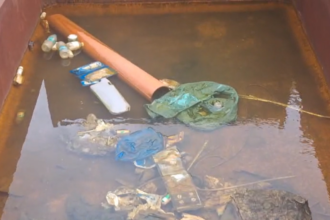
The campaign of rallies and meetings turned towards the end of 1986. The water pipeline to Margao, Salcete’s main town was ruptured and in the resulting demonstrations, seven people were killed. The entire State remained under a threat of sudden violent disruptions and life came to a standstill.
Bandhs, torching of buses, blasting of pipelines, threat to blow up bridges were the hallmark of the language agitation, even as people were being incited by communal invective. The worst month during the 555-day agitation was perhaps December 1986. On December 19, as Goa was celebrating the silver jubilee of its Liberation with the then President of India, Giani Zail Singh as chief guest, police opened fire at Agacaim and the national flag was shown disrespect at Rajendra Prasad stadium in Margao. A day later, the special reserve police shot dead Floriano Vaz at Gogol, Margao, and the very next day six persons died in group clashes in Mandur, Tiswadi.
If on the streets there was open animosity among the communities, within the confines of the Legislative Assembly it existed as well. While the MGP continued to stand by Marathi, the Congress was a house divided. Eight of its 22 MLAs – Vassu Paik Gaonkar, Shambubhau Bandekar, Subhash Shirodkar, Pandu Vasu Naik, Chandrakant Verenkar, Sangeeta Parab, Shamjibhai Solanki and Sombhai Prabhakar – revolted against Konkani and sought equal status to Marathi.
Bhembre said at that time that if Marathi was given equal status, it would be for the first time in the country’s history that a language not spoken in a territory is elevated to official status. Bhembre went on to warn the House that a language belongs to the people, and a decision on it, ought not, as such, to be left to the political whims and fancies of legislators.
When it was least expected, at a time when the protagonists of Konkani were going about their quotidian, the Legislative Assembly took up the Official Language Bill, debated it lackadaisically and passed it. On February 4, 1987, the Goa Legislature at 8:00 pm adopted the bill that made Konkani the ‘sole’ official language of Goa, with the rider that Marathi would be used for all official purposes in Goa.