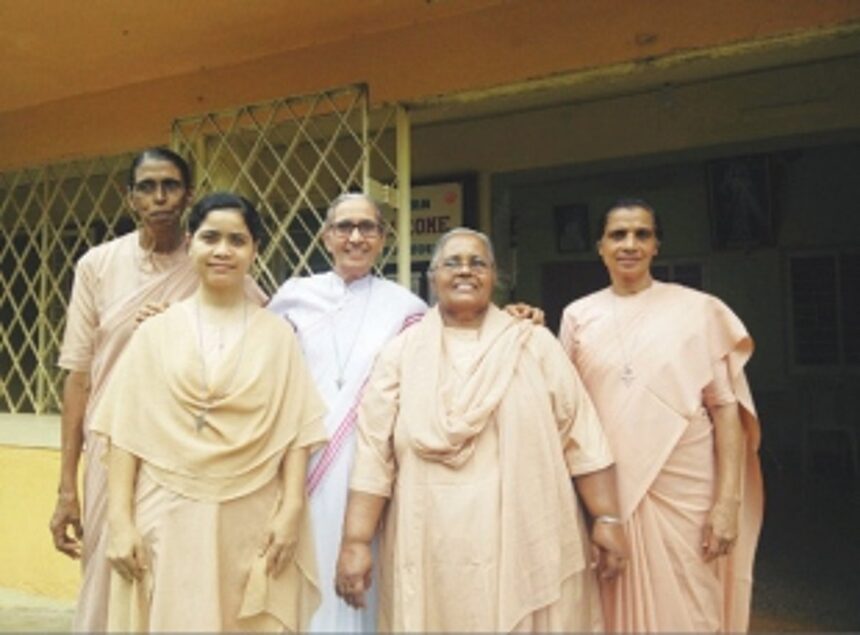
Squeals of delight and unbridled laughter greeted me as I walked into the Asro orphanage in Cavelossim. The children, eight girls and seven boys were busy playing football. It was a boys versus girls match and was evenly poised as both sides gave it their best shot. Though there was no referee, handballs if any, were reprimanded by Sister Pushpa Abraham, one of the four Franciscan Sisters of Christ the King (FSCK) who looked after the children. Sister Pushpa, quite clearly a football buff said, “Those touching the ball repeatedly will have to stay out of the game. This is football and not handball,” setting the tone for the evening game.
Football was followed by a game of cricket for the boys, a round of skipping for the girls, while a group even cycled around the large compound housing the Asro centre in this sleepy, South Goa village. Quite clearly, the children were expected to let their hair down and enjoy sport every single evening.
As Sister Irene Noronha, the Sister Superior explained later, the children followed a very systematic, daily time-table. Wake up time was 6 am followed by their morning chores, breakfast and school at 7.30 am. The children attended the Holy Cross parish school a few blocks away and got back to the centre at 2 pm. Lunch time was followed by tuition sessions, when the children trooped off to the homes of neighbourhood teachers who hand-held them with their school work. Play time was between 4 pm and 5.30 pm which was clearly the highlight of the day. This was followed by their daily bath and an evening snack at 6 pm. Study time was between 6.30 pm and 8pm, which was followed by a prayer and dinner. 9pm-930pm was time for the final revision of the day’s school homework which was supervised by one of the sisters with bed-time at 10pm. The children seemed clearly happy with this routine.
However, everything was not so hunky dory in the early days. Sister Vinita Joseph, key member of the Asro founding team in 2003 recollected the days of hardship. According to Sister Vinita, to begin with there was only a small dilapidated structure with just two rooms. The Sisters slept on the bare floor, while they made the destitute senior citizens comfortable on the small number of beds that were available.
However, over time, with help from society and Samaritans, Asro has blossomed into a home for orphaned children. The children who live and study at the centre hail from across Goa.
According to Sister Irene, society has opened its hearts to the centre. “People from all walks of life come and donate food grains, groceries, toys, clothes and food to us. Some groups even come periodically and play with our children or organise entertainment programmes for them. Some groups have even taken our children on picnics,” she said.
The Asro children have done well for themselves over the years. Three boys have passed their class XII examinations and are pursuing under-graduate courses. One of them is even working part-time to earn his living. Asro children, after attaining the age of 18 have to leave the centre and move into homes which are associated with the Franciscan Sisters.
The present lot too looks very promising and full of life. Ramesh ( name changed) is the most athletic of the boys. Blessed with natural footballing skills, Ramesh wants to first to play for the local Santa Cruz football club before donning Goa state colours. “I want to become a big football player,” he says with a twinkle in his eyes.
While Razia (name changed) says, “I love mathematics and science. I want to become a doctor to serve people in our society.”