Some 517 million people have travelled to destinations worldwide in the first half of this year—22 million more than in the same period last year—taking tourism arrivals up by 4.6 per cent globally. The UN World Tourism Organisation’s mid-2014 report released this month points to growth picking up significantly in the Americas (6 per cent—the World Cup in Brazil being a major driver) followed by 5 per cent in Asia and the Pacific and Europe. Within Asia, countries smaller than India—Japan, the Republic of Korea and Malaysia—posted double-digit growth rates. “The region has been benefiting from ongoing economic growth, continuous investment in infrastructure and visa facilitation measures,” UNWTO said, pointers to the basics that India’s tourism planners seem to fail to address as they chase around the world for “new markets”.
The World Economic Forum’s Travel & Tourism Competitiveness Report 2013 had Switzerland taking the top slot again for the best travel destination, given its infrastructure—great ground transport in particular—top-end hotels and staff. Germany which retained the second position in the rankings, found praise for its “great efforts to develop in a sustainable way, with the world’s most stringent environmental regulations—which are also among the best-enforced—and the strong support of international environmental efforts, as demonstrated through its ratification of many international environmental treaties.”
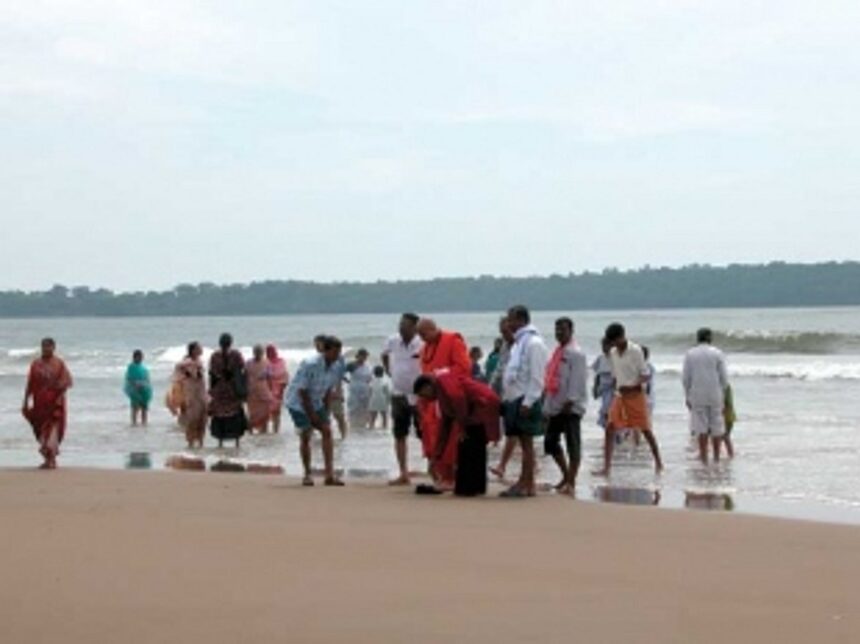
India which figures at 65 in the global competitive index might derive solace from the fact it moved up three notches from the 2011 rankings. But despite our natural resources and World Heritage sites, glaring drawbacks stare us in the face. Among them, the poor policy environment (which ranks us 125th globally), a restrictive visa policy (132nd) and the low health and hygiene standards (109th). The UNWTO estimates that between 300 to 350 million tourists visit the world’s key religious sites every year, making spiritual tourism a significant part of both domestic and international travel. India, no doubt, could be a major player in this segment. But is it ever going to push the right decision-making buttons?
We had 6.97 million overseas tourists last year, but nearly two and half times that number—16.63 million Indians—travelled out of the country. Thailand, a huge gainer from outbound travel from India, received 26.5 million tourists. Our share of tourist arrivals is just 0.64 per cent of the global figure, ranking us 42nd in the world currently, down four spots from 38th in 2011. China in comparison is in fourth position with 55.7 million tourists travelling there in 2013. It is preceded only by Spain (60.7 million), the USA (69.8 million) and France which was the most visited country in the world with 84.7 million tourists.
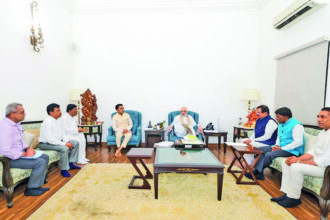
On his recent visit here to address a CII (Confederation of Indian Industry) interaction, Union Minister of State Sripad Naik who has been given independent charge of tourism talked of 50 tourist circuits for development, including cruise tourism for Goa, a core Buddhist circuit and pilgrimage circuits around India. Most such debates circle around done to death themes, with stock phrases such as “India will be positioned as a global brand” with “hassle-free travel”. On the ground, the picture is usually something else.
Take just the commitment to cruise tourism for Goa. In 2011-12, 25 liners came calling at Mormugao. In less than three years, the traffic is down to 17 vessels and a drop of 50 per cent in overseas visitors willing to disembark at Goa. The primary reason: shoddy facilities at Mormugao port. That problem is now sought to be addressed with plans for a new cruise passenger terminal at the port. The Chief Minister laid the foundation stone for it last month. The joint secretary tourism Anand Kumar who was at that function was quoted as saying, “This dream was visualised about 20 years ago when I served as one of the trustees at the port.” Which just about sums up the level of official commitment to such projects.
Mr Naik himself, however well-meaning, comes with practically no experience in the sector to take charge of the tourism portfolio—handed him probably only because he represents the “tourist state” of Goa. And the slip has been showing. From his rather thoughtless statement that a flyover would come up to link Panjim to Ribandar (which has a heritage causeway that needs to be protected, rather than dismantled) to his endorsement of Sudin Dhavlikar’s pub ban and now the Kala Ghoda controversy, Sripad Naik is having a rough learning experience, something India’s trailing tourism industry can ill afford. Naik’s announcement that Rs 5 crore would be given to set up large electronic billboards in Mumbai’s iconic Kala Ghoda area for corporates to advertise their products was slammed by the literati and glitterati of the city, who criticised him for his move to “Disneyfy” the heritage zone they have struggled to keep out of the hands of exactly such players.
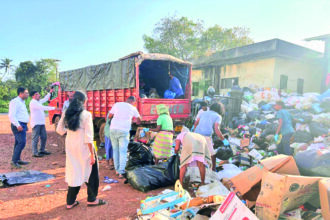
Such insensitivity is precisely the problem with those who run the tourism show. In Goa, we’ve recently been promised a Christmas bonanza of seaplanes and helicopters for “heli-tourism” (was there some confusion here with the word “hell”?). Our tourism minister Dilip Parulekar has already lined up the promoters, the Delhi based Meher Pvt Ltd for the seaplane project, and Pawan Hans (whose attempts in the past hit several air pockets) for the helicopters. Mr Parulekar has already cleared the air about how much we (the state) will have to invest. Nothing at all. We’ll simply be taking a percentage of the profits earned. The percentage, he said, “will be worked out at a later stage”. Therein lies the rub. Do we know how much money the offshore casinos in Goa are making? Or, to borrow a comment from artist Subodh Kerkar, Parulekar probably intends to give tourists an aerial view of the garbage strewn all across Goa.
WEF statistics show the travel and tourism sector accounts for 9 per cent of the global GDP—a total of US$6 trillion—and provides 120 million jobs directly and an estimated 125 million indirect jobs in related businesses. “This means that the industry now accounts for one in eleven jobs on the planet, a number that could even rise to one in ten jobs by 2022, according to the World Travel & Tourism Council.”
Obviously Goa has all the assets. But is it ever going to clean up and shape up?