Herald: We go on to a very critical segment, that of garbage. Alka has prepared a very good powerpoint presentation on this.
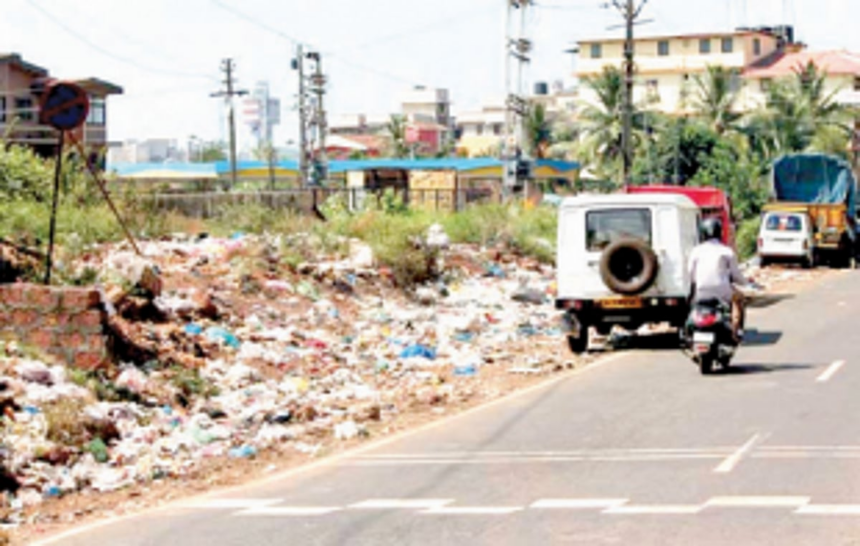
Damle: We are wasting our waste, especially in today’s times. Waste can be converted into energy. Every little thing that is wasted should not be wasted at all, including your dry garbage and wet garbage. Everything you want to throw can be converted into energy. People, if they come together, can do wonders. We need to stop the blame game. No government alone can make a city smart, unless the people also join in. It has to be hand-in-hand efforts. I had asked shopkeepers why they threw their waste, like packing material, along the platform. The answer that I get is very sad. They ask me to go to the Mormugao Municipal Council and ask them why they don’t pick it up. They say that they have taxes, and hence, have a right to throw. I told them they had a right to throw, but they should throw it in a decent manner. Unless we change our attitude, things will not change. For so many years we have been hearing about the incinerator at Sada. There was a lot of corruption in acquiring that. It did not function for more than a month and it is still not functioning. When you visit that site where the garbage is dumped, you can’t even stand there for two minutes, and there are people who are living there and cooking their food in that polluted atmosphere. Our Deputy Chief Minister appealed to everyone to come together for this garbage issue, and on the other side, there is a lot of corruption. In 2013, the National Green Tribunal also blamed MMC. Even if MMC has given wet and dry garbage bins, ultimately the garbage is all dumped in one place. The authorities should ban plastic bags, encourage self-help groups to make cloth bags, and sell the same to vendors at a reasonable cost. We have done it in Mumbai. For nearly two months, had asked people to accept the fact that no more plastic bags would be issues and they had to carry cloth bags. Till today, that is going on. We can do it in Goa if people are given enough time and the MMC supports the cause.
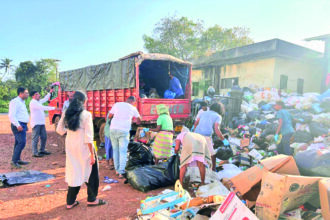
Herald: Let us look at the problems of domestic waste collection, i.e. segregating waste at every home and collecting it. Why have we not managed to do that? Why has door-to-door collection not begun in earnest, if it has begun at all? Which agency is responsible? Are we willing to outsource collection?
Naik: The municipality has given two bins for every household. A green bin and a black bin; one for wet and one for dry garbage. But there is no awareness on which bin is for what waste. They put everything in one bin.
Messias: No doubt, two bins were given. They are being collected, but the collector would mix it up. What is the purpose of segregating? Just outside the gate they would mix it up.
Coutinho: Those who were collecting waste were not paid, and as a result, they stopped collecting.
Kamat: I had told a waste collector that I am segregating waste at my home, but he had only one bin with him. Outside my office, it is not happening. If people are dumping garbage, why isn’t the MMC collecting fines? I had asked some councillors that. For some time, people were afraid to dump garbage.
Khan: Every person does segregation, but the collector mixes it. I request the municipality to supervise wast collection.
Joshi: I do not want to say anything because it is a common problem everywhere. If you go to the root of the problem, we start with the basic mistake: where to throw the garbage. You don’t throw the garbage anywhere. You keep it with you and someone will come to collect it.
Damle: I’m sorry to say that attitude will never change unless one is penalised.
Joshi: We require a very strict law for this. I would like to use the example of smoking. Earlier, people used to smoke anywhere. Today they have stopped. But if you find out from the Law Department, no case has been filed for smoking in a public place. It is public pressure that has made people avoid smoking in public places. Airports and hotels have made a ‘smoking zone’ because a law had been made for it. In Goa, we do not have a common law for garbage. We also do not have technology for collecting garbage. This segregation of garbage is one of the most wonderful things that has happened to Goa. We are a small State of 15 lakh people. The government should see how waste collection is done in advanced countries. Why are we not bringing that technology here?
Damle: The MMC should stop collecting wet waste. The people should be educated enough to compost their own wet waste, which is very easy and there are many ways to do it.
Herald: Why can’t we have a solution where collection of segregated garbage is implemented and why keep only two bins? Panjim has three or four. What is even more important is that the person coming to pick up garbage needs to pick it up in the segregated form. But after that, where does he take it to? If you do not have a functioning plant, how do you treat that garbage?
Joshi: If we start raising awareness in schools, I think the next generation will have a better place to live.
Naik: There are educated people in Vasco. But the people in slum areas pose a bit of a problem. They do not segregate their garbage. At the site, we have some 20 – 40 labourers who segregate waste daily.
Coutinho: It is my dream to have a least one day in two months where the people of Vasco come together and clean up their areas with the help of the municipality. Automatically people will become aware that they need to keep their surroundings clean.
Nunes: Segregation is very important at source. If we don’t do it, nothing will happen.
Messias: Assume we have done segregation and trained the municipal workers, and everything is done. The important thing is where are we going to set up a plant? People are opposing plants everywhere. The media is also playing an irresponsible role in encouraging people to oppose plants.
Kamat: When you buy a product, somebody decides what is put in that product. Afterwards it goes into your garbage. Who is supposed to decide its end of life? For plastic and e-waste there is a rule. The municipality is responsible for the plastic and the Goa State Pollution Control Board is responsible for the e-waste. What is toxic and hurts us? Stinking waste does not hurt us because it is biodegradable. We need to look out for the toxic waste. It has to go back to the producer, the packaging and manufacturing industry. Let them tell us what to do with the stuff they give us or let them take it back. Why are the people and municipality fighting?