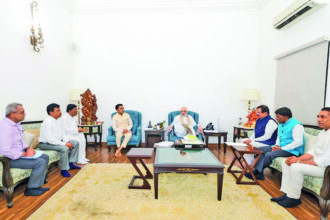
Herald: There are three topics we will debate quickly: traffic congestion, parking, and no proper market. Let’s begin with traffic congestion. 500 heavy vehicles, 5,000 cars, 10,000 two-wheelers and 300 passenger buses – how do we stop congestion?
Khan: It took 10-years to build a 7-kilometre stretch of a four-lane road. Nobody is taking an initiative to complete that road. Once that road is built, Vasco’s traffic problem will be solved. The government had promised it.
Messias: Vasco doesn’t have too much congestion. It’s only during peak hours. One of the main problems is parking, especially taxi parking. Cars are being parked in the city day and night. Nobody wants to take their cars home. They just park their cars and go. The Tourist Trade Act clearly says that you have to park your taxi at home, but nobody follows it.
Joshi: Vasco is the only town in Goa that was planned by the Portuguese government. Vasco has three main roads. There is a road on which the government has spent so much money – the third road that is passing by Khariwado – that has not been used for the last 20 years. Why is it not being used? The reason is our political fathers. In New Vaddem, there is haphazard development. There are no good roads. The number of vehicles is growing, but we have not expanded our roads. Parking is another problem. Vasco does not have sufficient space for parking. One wonderful thing that the MMC did was expand the footpath in such a way that people could park at the side. Unless there is a plan, nothing will change.
Kamat: I got into this project with Don Bosco College of Engineering. I told the students that we had a problem of traffic, parking, and accidents in Vasco. With the help of traffic police, they did a little survey to understand how many vehicles are coming into Vasco. They came out with solutions, like the alternative route that we need for the national highway and multi-level parking. We all thought of what the MMC could do. Drain covers could be put in place so that vehicles could be parked and people could walk on them. I don’t agree with the solution of taking over pedestrian space and using it for parking. Where are we supposed to walk? We need to do planning. We need to know how the city grows. You have to plan bus stops, bus schedules and routes. We need to have toilets in the city.
Joshi: One of the reasons we are facing parking problems is that most big buildings that have come up have shown their ground floor as stilt parking on the plan, but after getting their occupational certificate, the ground floor has been converted into shops. The authorities have to ensure that the plans certified by them are the same plans executed.
Naik: The road that Nazir is talking about is a Central government project and the work is currently going on. I agree with him that if the road is built, Vasco’s traffic congestion problem will be solved. Secondly, we will stop ore transportation in the city. 450 trucks are roaming on our small city roads every day. On the parking problems, the MMC has already taken some resolutions. We already have a multi-level parking proposal, for which financial estimates is currently being done. The file was earlier rejected for some technical problem.
Khan: Shree Damodar Trust is in custody of 4,000 square metres of land for the last 28 years. This is municipality land. The municipality must take it back.
Joshi: This land belonged to the municipality and was given to TB Sanitorium. The land was not used. I wanted to convert the place for a nice auditorium. I was given legal advice that if the government does not use the land for more than 21 years, it can be taken back. The government then handed over the land to a private trust. I objected to the fencing of the property, which was done without permission from the MMC. I had to win the case in the Supreme Court. Later, that plan that came for the auditorium was for only 250 people in the auditorium. I had told the then Chief Minister to keep public servants, like the mamlatdar and deputy collector, as members of the trust. But that was not done. The government had the right to take the land back. The next government that came also handed over the land to the trust for another 21 years. That land can only be taken over legally.