Team Herald
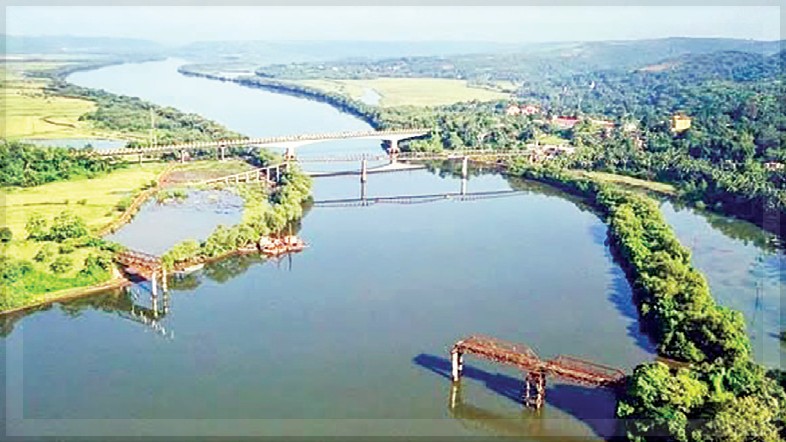
MARGAO: The New Year did not bring any joy for farmers of Borim and Loutolim, who were left disappointed after the National Green Tribunal (NGT) again adjourned the hearing of their plea against the construction of the proposed high-level new Borim Bridge. The next hearing date has been fixed for February 17.

This marks yet another delay in a series of adjournments, with the NGT’s Western Zone Bench in Pune repeatedly pushing back hearings, citing the need for more time for both Central and State government agencies to file their replies.
In addition to seeking a ruling on the bridge project, the farmers had requested an immediate stay on construction activities as well as the ongoing land acquisition process. However, the NGT declined to issue a stay, stating that they still required more time to review the responses from government authorities.
The petitioners’ legal counsel expressed dissatisfaction with the repeated delays, emphasising that the government had ample time to prepare its case, with requests for extensions dating back to May 2024. While the Ministry of Environment, Forest and Climate Change (MoEF&CC) has filed its response, other government departments, including the Goa Public Works Department (PWD), have sought additional time. Tuesday’s hearing saw arguments from both the petitioners and the government representatives before the matter was once again adjourned.
Albert Pinheiro, President of the Carbot, Mascasana & Bebdo Tenants Association in Loutolim, voiced his displeasure, saying, “We are very upset, as this was supposed to be the final hearing. We had hoped the December hearing would be the last, and now it’s postponed again. However, we understand the government gets three chances to file further replies, and we hope this is the last one.”
Farmers have expressed their concerns over what they believe to be a deliberate delay tactic by the government. On one hand, they argue, the government has been moving swiftly with land acquisition, dismissing their objections without due consideration. On the other hand, the government continues to seek extensions in the NGT hearings, leading farmers to suspect that this is a strategy to clear the way for the bridge project without facing legal hurdles.
Pinheiro said, “We are still waiting for the copy of the order. Once we receive and review it, we will decide our next course of action. Our petition is comprehensive, spanning over 900 pages.”
In addition to their NGT plea, the farmers are preparing to take the matter to the High Court. “Yes, we will be filing our petition before the High Court soon,” Pinheiro confirmed. The farmers have also raised concerns with the Town and Country Planning (TCP) Department regarding the incorrect classification of their khazan lands in the Regional Plan.
Further, a petition has been filed with the Goa Coastal Zone Management Authority (GCZMA), citing potential damage the bridge’s construction could cause to the khazan lands, which are protected under the Coastal Regulation Zone (CRZ) rules.
The farmers argue that the proposed bridge design, situated on NH-17B (NH-566), ignores the environmental sensitivities of the area, including the presence of CRZ zones, forests and vital khazan lands. They contend that the project threatens eco-sensitive areas, which are crucial for local agriculture and aquaculture.
The petitioners also highlighted the significance of the Zuari River, Goa’s largest, and its saline wetlands, which have been reclaimed for agriculture over 4,000 years by indigenous communities. These khazan fields feature an intricate system of clay bunds, sluice gates, and fish-breeding bodies of water, all essential for sustainable livelihoods.
In their plea, the farmers urge authorities to reconsider the bridge’s design and obtain the necessary environmental clearances under the EIA Notification of 2006, stressing that proceeding with the current plan would result in irreversible damage to the khazan ecosystem.
Standalone bridges don’t need EC: Centre tells NGT
Team Herald
MARGAO: The Union Ministry of Environment, Forest and Climate Change (MoEF&CC) has stated in its reply before the National Green Tribunal (NGT) that standalone bridge construction projects do not require Environmental Impact Assessment (EIA) clearance unless they are part of a National Highway project.
The case relates to a petition filed by the farmers of Loutolim and Borim, opposing the construction of the new Borim high-level bridge, who had argued that an Environment Clerance (EC) is required and the government does not have one for this project.
However, regarding the specific Borim bridge project, the Ministry maintained it cannot provide a definitive opinion as no project proposal has been received yet. “The proposal for the project in question has not yet been received by this Ministry. As a result, the specific dimensions and details of the project are not available to render a definitive opinion about the permissions/clearances required for the project at this stage,” the affidavit stated.
In its detailed reply affidavit filed before the NGT’s Western Zone Bench in Pune, MoEF&CC stated that “the construction of a standalone bridge does not attract the provisions of the Environmental Impact Assessment (EIA) Notification, 2006 as amended, unless it forms part of a National Highway project, which is covered under Item 7(f) of the said Notification.” The Ministry added that bridge construction is permissible and regulated in specific zones within coastal areas under both the CRZ Notification of 2011 and 2019.
The reply, filed through Scientist ‘E’ Suresh Kumar Adapa from the Ministry’s Bengaluru Regional Office, came in response to the NGT’s order dated December 2, 2024. The Tribunal had specifically directed the Ministry to clarify whether the project would require Environmental Clearance.
At the outset of its reply, the Ministry stated that it denies all averments, submissions, statements, and allegations made in the matter except those specifically admitted in their affidavit.
MoEF&CC also requested the Tribunal to pass appropriate orders as deemed fit in the interest of justice, while reserving its right to file an additional affidavit at a later stage if necessary.