The recent Indian elections saw an overwhelming parliamentary victory for Narendra Modi and the BJP, ushering a sense of euphoria in the country. It seems for now the majority of the Indian electorate has wholeheartedly embraced Modi’s capitalistic economic ideology.
As Chief Minister of the State of Gujarat, Modi’s policies were lauded by economists Arvind Panagariya and Jagdish Bagvati of New York’s Columbia University. On the other hand, the Nobel Laureate, Amartya Sen, was critical of his record on education and health care. The political scientist Christophe Jaffrelot also argued that the development in Gujarat was limited to the urban middle class, citing the fact that Gujarat ranked 10th among the 21 Indian States in the Human Development Index almost solely related to lower development in rural Gujarat. Pankaj Mishra in a scathing article in the Guardian stated: “His record as Chief Minister is predominantly distinguished by the transfer through privatization or outright gifts of natural resources to the country’s biggest corporations.” Mishra also castigated Modi’s promise of skyscrapers, expressways, bullet trains, shopping malls─all symbols of capitalistic materialism.
India’s Economy
Prime Minister Jawaharlal Nehru, sought to industrialize India, and believed that this would transform India’s masses into affluence, rationality, and modernity─an ideal that was impossible to achieve. The notion that he pushed for a socialist India was debunked by Drèze and Sen, in their book, An Uncertain Glory. However, many of his policies and that of subsequent administrations, unlike that suggested by Gandhi and Tagore, ignored rural India. Prime Minister Indira Gandhi, ushered the nationalization of commercial banks in 1969, and declared a state of emergency in 1975. These policies solidified a huge apparatus of patronage and corruption, and the license-Raj phenomena continued relentlessly under subsequent administrations. These and other policies were detrimental to the economy of the country as a whole, and for private investment, and the opening up of markets for foreign capital.
After independence, with its Soviet style 5- year planning, India became a huge bureaucracy; nonetheless, historically, India went from a GDP of 0.9% per year during the colonial period to a GDP of over 3.4 % in the early post-independence years. In the 1990’s however, the GDP growth ushered in by the economic policies of the then Finance Minister Manmohan Singh was one of the highest in the world (7-9% from 2000-2011) surpassed only by China.
Although, India’s economic growth was celebrated in the media in India and abroad, “the societal reach of economic progress has been remarkably limited,” write Drèze and Sen. Although there have been significant increases in living standards, poverty reduction, and rise of the middle class and the superrich, approximately 22-37% remain poor, the majority of which dwell in rural areas. (The lower figure represents Indian government statistics; the higher figure reflects India’s population living below $1.25 per day on purchasing power parity basisprovided by the World Bank).
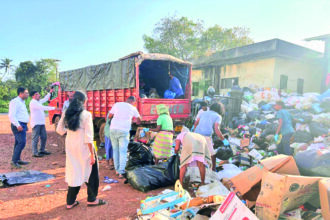
Andy Summer in 2014, estimated that almost 35% of the world’s poor live in India─a rather staggering statistic for a high growth economy. Furthermore, social infrastructure including education, child welfare, women’s rights, health care, sanitation, garbage disposal, the availability of toilets, safe water drainage etc. are inadequate, and have not kept up with growth. In this regard, India falls far behind China. However, growth and elements of social infrastructure are not uniform throughout India. The South Indian states of Kerala, Tamil Nadu, and Himachal Pradesh, have significantly higher levels of human development than many of the Northern states.
India has to maintain a consistent high growth to tackle many of the problems outlined above. However, growth needs to be specifically targeted to achieve societal benefits and economic progress of almost one-third of India’s population.The public distribution system consisting of The National Rural Employment Act (NREGA) and the Public Distribution System (PDS) if devoid of corruption; legislation outlawing caste discrimination, and the fact that significant social changes are taking place in India, should correct some of the deficiencies discussed above.
The future
The expectations of a Modi government bringing radical change in the Indian mindset, the vast Indian bureaucracy, high growth, and eradication of widespread corruption, are perhaps too ambitious. However, a strong, determined leader, like Narendra Modi, with widespread public support, has the potential for a significant economic makeover.
The Indian-American diaspora gave Prime Minister Modi a resounding rock-star welcome at Madison Square Garden that was packed with nearly 20,000 Indian-Americans, including a contingent of American Congressmen and Senators. The energy and enthusiasm for Modi’s speech where he promised wide ranging changes, the invocation of Mahatma Gandhi’s contributions and sacrifices for the country, and the lifting of visas for the Indian-Americans whom he credited for changing the image of India from a land of snakes to that of the mouse was well received.The event organized by the recently formed Indian-American Community Foundation (IACF) underscores the fact that the Indian American Community, the richest of all Asian-American subgroups, and highly educated, had arrived as a political force to reckon with. However, such euphoric celebrations need to be tempered. We are well aware of the Obama’s slogan for change, and the Yes we can that so far hasn’t materialized. Prime Minister Narendra Modi, unlike Obama however, has a large parliamentary majority and the country has placed its hopes and aspirations on him to deliver!
One gets the feeling that Modi will be an all- inclusive Prime Minister and downplay the concept of a Hindu-India disregarding the Indian Muslims, Christians, and other religious minorities as second class citizens. It is unlikely that his economic policies of privatization and capitalistic materialismalone will benefit the Indian masses. However, some of his recent policiesof providing toilets, the opening bank accounts for rural Indians, the Clean India initiative, school lunches, and initiatives on health care are all promising.
Anthony Gomes is Professor of Medicine (Cardiology) at the Mount Sinai Medical Center and the Icahn School of Medicine in New York.