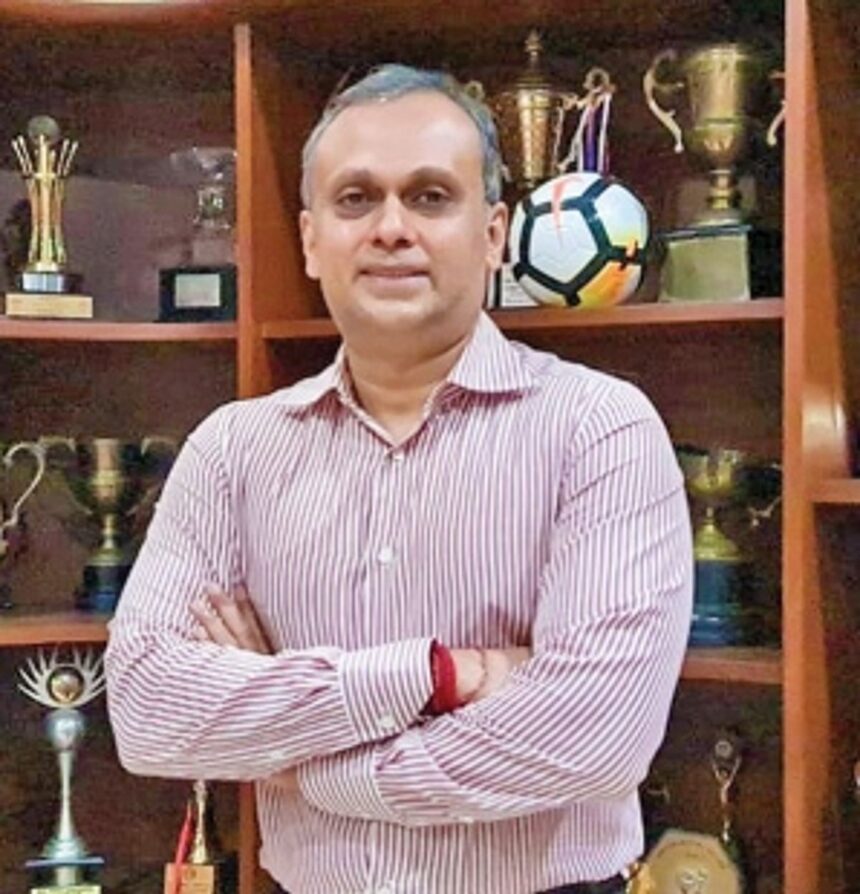
Herald: It’s been five years since Dempo withdrew from mainstream football. How have Dempo been trying to regain trust among their fans and people again?
Shrinivas Dempo: Rather than spending money where there was no clear vision and no roadmap (after withdrawing from I-League), we thought the best is to devote resources to something else, and that is why we focused on grassroots. To answer your question, there was disappointment among the fans and I still get calls as to when will Dempo get into the main league. The only answers I have is, let us get back into the main league through a proper roadmap and through a proper performance based system where now we are training our boys who are part of the academy and hopefully from there, they can get into the next phase. The performance should decide on the team getting into the higher level, rather than getting a very expensive player bracket where you spend crore of rupees on foreigners.
Herald: People of Goa woo for the five-time National champion. Can we see Dempo in the national league again?
SD: As I said we have to evaluate our strengths within the academy. I think the academy is right now at a very young phase. We barely spent 3-4 years and to expect them to get straight into the I-League will be a bit too much. Our main intention is to go entirely through the merit process and use as much as our own players. Now whether that fits within the plan or how comparative it will be, it’s too early for me to answer right now. But, yes, the long term intention is there to return to competitive football.
Herald: Do you think ISL can support more than one Goan team?
SD: I personally feel ISL will be able to support only one Goan team. I don’t know how AIFF or ISL will react to having two teams from Goa. The whole revenue model doesn’t work for Goa. We are a small State. That’s too early to judge but AIFF said they will get into promotion-relegation and by their definition Goa may have two teams. But that’s something that needs to be seen because for Goa, the spectator base and market is too small if you compare it to Kerala or Bengal. It’s a big difference there.
Herald: Moving out of the I-League might have helped the club, but there was a setback for the 100 of Goan players who lost the opportunity to play top level football. How can we tackle this situation?
SD: The budget for I-league was different and there was a lot of talent pool. The number of teams has been reduced, the number of job opportunities in this sector has gone down. That will come up only if the landscape of football changes. If you have the same system, the same thing will continue. Once promotion-relegation starts, I don’t know whether it will be economical for ISL, but clubs definitely will need players and so though merit Goan teams progress and promote. Job opportunities are still there. At national level there are clubs, why can’t our Goan players get there?
Herald: A club is a community asset, at least in Goa. Do you think we have the right ecosystem to run a football club as a business?
SD: As a business, right now it’s a loss making entity. And it’s not only here, but across the world. The kind of money that is burnt in football is tremendous. India is far away from the ecosystem. We need to dream that by a particular year, we qualify for the World Cup. Just to win a league it’s only a matter of pride. If you win, and if you want to maintain the trophy, you have to spend more. It’s a vicious circle. So how does a team make money? 1: A low cost model. You develop future stars through your academies which can either play for you or you can sell them and make millions from the transfers. People will look at us seriously when we qualify for the World Cup. Today, not a single club is making money. That’s why we need to work on a low cost model.
Herald: You started the academy in 2016 and within two years dominated the youth football in Goa. What was the secret to success?
SD: Katz Naidoo (former technical director) laid a very strong foundation for our academy. The boys whom he had taken as U-13 then are in U-18 today. That team is really good. But we can’t be satisfied with one team. We need many such players and they need to go notches above. For which you need a proper curriculum, proper scientific training, and nutrition, mental health football is everything. If you want to develop football as a culture, if you want more youngsters to take football as a career, we need to get into that mode. We need more – A (ONLY one) World class coaches and then training of these coaches. Fortunately for us, Katz was there to train these coaches and today we are using the same coaches.
Herald: What are the plans for the academy?
SD: We have state of the art infrastructure which is used by ISL clubs for training. Now, we have set up a hostel and next in the plan is to install artificial turf. We want to develop the whole ecosystem. We want to adopt the schools nearby. It’s not just about money; we want to develop football as a sport which is loved by Goa.
Herald: Dempo SC has been one of the most innovative clubs in India. Do you agree the club needs to implement modern sports science technology?
SD: Absolutely true. That’s the only thing which we haven’t started at the club so far. Mental training, in-house medical facilities –These are the next things at the academy. That’s the only way to play international football. They are all into strength and resilience. Clubs abroad pay a lot of attention to this. All clubs neglect mental training and scientific training. The whole culture has to be changed. It’s 99 per cent mind training and one per cent physical training. We are definitely working on this to implement at the academy.
Herald: Any plans on designing a tailor-made programme in terms of academics for the footballers like the one which we see in Europe?
SD: The parents may not be able to take that risk. Here at least they have a chance, that’s why we have a tutor for them. The Class 10th and 12th gave us 100 per cent results. I don’t expect them to be amazing in academics, because they are footballers. But at the same time, if they fail in football, they should have an option to go somewhere else. And that becomes our academy’s responsibility. Tomorrow, if I do it at my level the courses will not be recognised by the Goa Board or the universities.
Herald: With Dempo having various education institutions, can you work on a project/academics designed to cater the sportspersons?
SD: Definitely, we can work on employment oriented courses, rather than the bookish thing. Efforts can be made. It’s worth pondering thought and evaluating how we could achieve this. Today the whole world is moving towards a different system of education. Today it’s more about application than theory and these people will be the right boys for application theory because they are not interested in mugging (theory).
Herald: Do you think the club with a rich history and great legacy needs to change/upgrade their marketing strategies to accommodate the new target audience?
SD: That’s one thing we have been too low profile. We need to resort to new social media techniques, we need to get more visibility and eyeballs and I think once we reach that competitive phase. Since we are not into any major competitions, we will have to invest more money in these areas. Today, whether right or wrong, the media plays a major role. We need more emphasis, more resources to put in that department. That itself can be another business.
Herald: Dempo following is all throughout Goa. However, their main following came from Ilhas. What consequences did the club face due to mass migration of people from this region?
SD: When we were in I-League, I was toying with the idea of changing the name from Dempo to a city based team, because at the end of the day, I may be the promoter of the Club, but the team belongs to Goa, people of Panjim and probably what happened that time was there were mixed opinions. Dempo is already a brand and people asked why change in the name when Dempo is already known across. But that also required a whole relook at the marketing. Once you re-launch the brand, then you need to create the aura around it.
Herald:What are the steps taken to keep those fans in the joint?
SD: But in order to retain, if you want a large spectator base, you need to give them enough facilities rather than saying I am a Dempo fan. Make them members of the club, give them merchandise, make their kids involved, but right now the fan following is dispersed and spread all across Goa. I get more inquiries from South Goa than North Goa. The factory of football in Goa, is south. I would not strictly say that Dempo was a Panjim-based club but, I was in favour of a city-based name. Right now it doesn’t make sense because we are not in competitive football, but yes, at some stage, probably we could rethink this idea.
Herald: Where do you see Dempo SC in next five years?
SD: Some competitive football. Too early to say whether it’s I-league or something but in the next five years our academy boys will be in much better shape. And probably I would want many of the Dempo trained boys to play in the mainstream because that will be the real satisfaction of an academy. If 100 per cent of my boys are absorbed in ISL/I League, then I have a successful academy. That should be our goal. The boys should be well placed, they should do well for themselves, be good human beings and be good footballers.