For the past several decades, Goa’s tranquil rivers, including River Zuari and River Mandovi, the lifeline of the State, have been silently bearing the brunt of omnipresent pollution, the scale of which has increased alarmingly.
In fact, a recent study by the Goa State Pollution Control Board has revealed some startling facts that indicate high-level and serious pollution in our rivers.
South Goa’s River Sal tops the chart, wherein Fecal Coliform (FC) at Khareband-Margao records at an alarming 54,000, while the total Coliform is at a whopping 92,000. Interestingly, the FC at River Mandovi near Hotel Marriott, Amona Bridge and Ribandar-Chodan Ferry is 2,400, 3,500 and 3,300 respectively, while the total Coliform recorded was 5,400 across the first two stretches of River Mandovi and 7,900 at the ferry point.
The water quality status at River Zuari near Borim Bridge too displays grim reality of 3,500 FC and 5,400 Coliform.
Arguably, Goa’s major rivers identified under the National Waterways project are evidently highly contaminated, owing to the continuous discharge of raw sewage and the call for immediate dredging and detoxifying these water bodies is only getting louder.
However, the government has been dilly-dallying to take a decision and wave the green flag, primarily due to the evident paucity of funds, bearing in mind the high cost of initiating the project.
Fortunately, the Centre is set to fund the mammoth project, even as the Goa government will retain rights to allow or reject development works including dredging of the rivers, which is possible only by signing a tripartite MoU. The initial amount for undertaking various works under National Waterways is said to be at nearly a whopping Rs 1,500 crore.
Thankfully, the State government, through its own funds, has successfully completed desilting River Sal from Khareband to Varca-Talaulim Bridge, covering a distance of about six kilometers, over a year ago. The cost of the project was pinned at around Rs 3.7 crores.
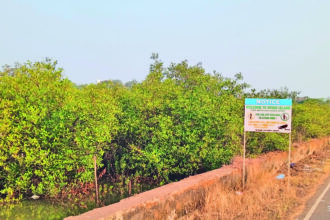
A senior government official disclosed that the exercise by Captain of Ports Department has ensured the smooth flow of the river, which otherwise would be encroached by mangroves, with branches obstructing the flow of waste, which would in turn result in waste getting accumulated at one point, which is among the key factors of river contamination.
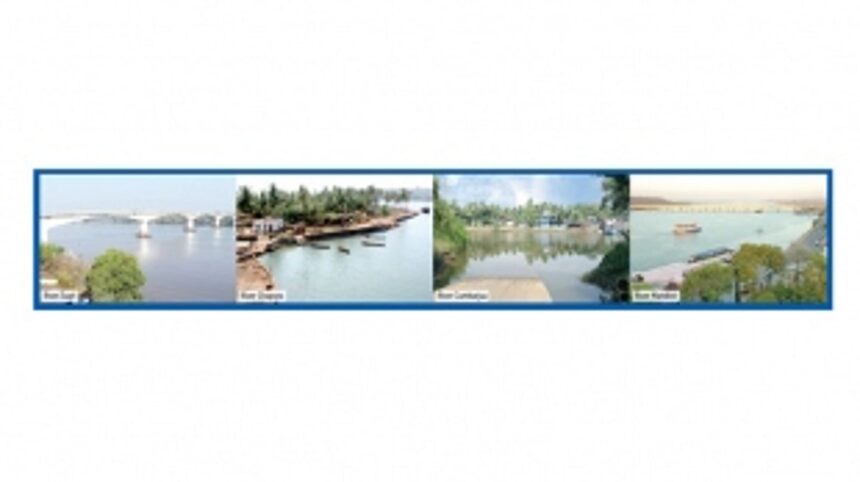
Zuari River, which is one of the lifeline of Goa, ranks first with 50 kilometres of its stretch scheduled to be notified as that of national importance followed by Mandovi which will be notified of its 44 kilometres stretch.
Likewise, Chapora River’s 33 kilometres, Mapusa’s 27 kilometres and Cumbharjua’s 17 kilometres stretch is tipped to be taken up for development under the notification, which is currently facing opposition from NGOs and fishing community in the State.
River Sal, once an important lifeline of Salcete that flows into the Arabian Sea, has the lowest notified stretch of 14 kilometres, which has been taken up for development. The stretch near Devsa Bridge in Orlim to Arabian Sea will be taken up for the activity.
Over the years, River Sal has been losing its importance, specifically as the water body’s prominent portion remains unnavigable. Hopefully, subsequent to the MoU with the Centre that aims to provide 100 per cent funding to clean it, things will be better for this arguably neglected river.
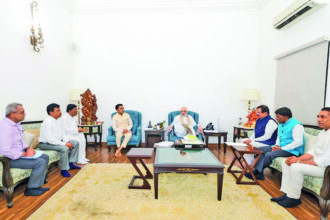
Bearing in mind the apprehensions of various stakeholders, Chief Minister Manohar Parrikar has clarified to the NGOs, legislators and the fishermen community that dredging of any part of the rivers would not be taken up before taking them, locals and those that depend on the rivers into confidence. In fact, the disheartening presentation which was made public on Monday cut a sorry figure about the pollution levels in the rivers, which displayed that almost all exceeded permissible levels, with River Sal in the red.
In fact, certain elements had floated the misconception that all the six rivers would be taken up for development only after declaring them as of national importance, without taking the citizens into confidence and Goa government was quick to vividly clarify that only certain stretches of these rivers would be considered under the central government notification.
Senior State officials who are finalising the MoU to be signed with the Centre’s Inland Waterway Authority of India (IWAI) said only selected few stretches of these rivers, which are navigable, would be taken up for development, that too after taking the various stakeholders into confidence.
Subsequent to the approval of State government, CoP awarded work of undertaking Environmental Impact Assessment of another 18 kms stretch of River Sal would be taken up from Talaulim Varca Bridge downstream up to the mouth of the River, in Phase II.
Accordingly, the official pointed out that the dredging for smooth plying of tourist boats to NIO at the cost of 95 lakh would also be taken up.
For Chapora River, the CoP intends to undertake dredging for which NIO has been approach to conduct rapid EIA to the tune of Rs 69.50 lakh.
Exclusive information available with Herald reveals that NIO has submitted draft Rapis EIA, which has now been forwarded to the government for ‘perusal and information.’ It will then be submitted to the Goa State Bio-Diversity Board for its approval as well as for obtaining requisite NOC for dredging at the mouth of the River.
“We have already obtained NOC from Goa Coastal Zone Management Authority (GCZMA), Goa State Pollution Control Board and the concerned village panchayat, valid for a period of five years,” an official told Herald.
While the process for development of the two Rivers by the State government is underway, the CoP has already commenced dredging in the vicinity of Sao-Pedro-Diwar ferry route, through department of dredging machineries. Sources said that the work began on November 6, 2017.